



Cybersecurity in Australia has seen rapid technological advancement in the past decade; however, humans remain a critical weakness. This continues to drive the majority of the cyber incidents, causing costly legal and reputational damages to Australian businesses.
The Australian Signals Directorate highlighted this reality in their 2025 report, which found that insider threats alone accounted for up to AU 324.8 million in damages. For 2026, insider threats, along with AI-driven attacks, are among the top cyberthreats predicted to cause more frequent and sophisticated incidents.
To navigate the evolving cybersecurity landscape, the Australian government recognises that technology alone isn’t enough to strengthen resilience. It has turned its focus to its people, emphasising the importance of increasing awareness in building a cybersecurity culture.
This article examines what cybersecurity culture is, its benefits, and how Australia leverages it to strengthen cyber resilience. It also explores how enterprise-grade board portals can support leaders in fostering a strong cybersecurity culture by streamlining governance and decision-making.
What is cybersecurity culture?
Cybersecurity culture refers to the collective mindset within an organisation that shapes how people protect an enterprise and its digital assets. It’s typically built through a top-down approach, in which the board of directors play a central role in setting the tone. They establish internal controls, but implementation is a shared responsibility among other leaders, such as the Chief Information Security Officer (CISO), senior executives, and operational managers.
An organisation has a strong cybersecurity culture when its employees perform security practices without hesitation or fear. This promotes quick reporting of incidents, proactivity in securing individual accounts, and willingness to attend security training.
How Government Policy Shapes Cybersecurity in Australia
Cybersecurity culture is essential for the government to strengthen national resilience against evolving cyberthreats. In Australia, multiple government agencies, such as the Minister for Cyber Security and ASD, are working together to enforce relevant policies and incident reporting standards.
Likewise, the massive data breaches at Optus and Medibank in 2022 urged the Australian government to intensify its cybersecurity initiatives. Here are the policy reforms it has implemented since 2023.
2023–2030 Australian Cyber Security Strategy
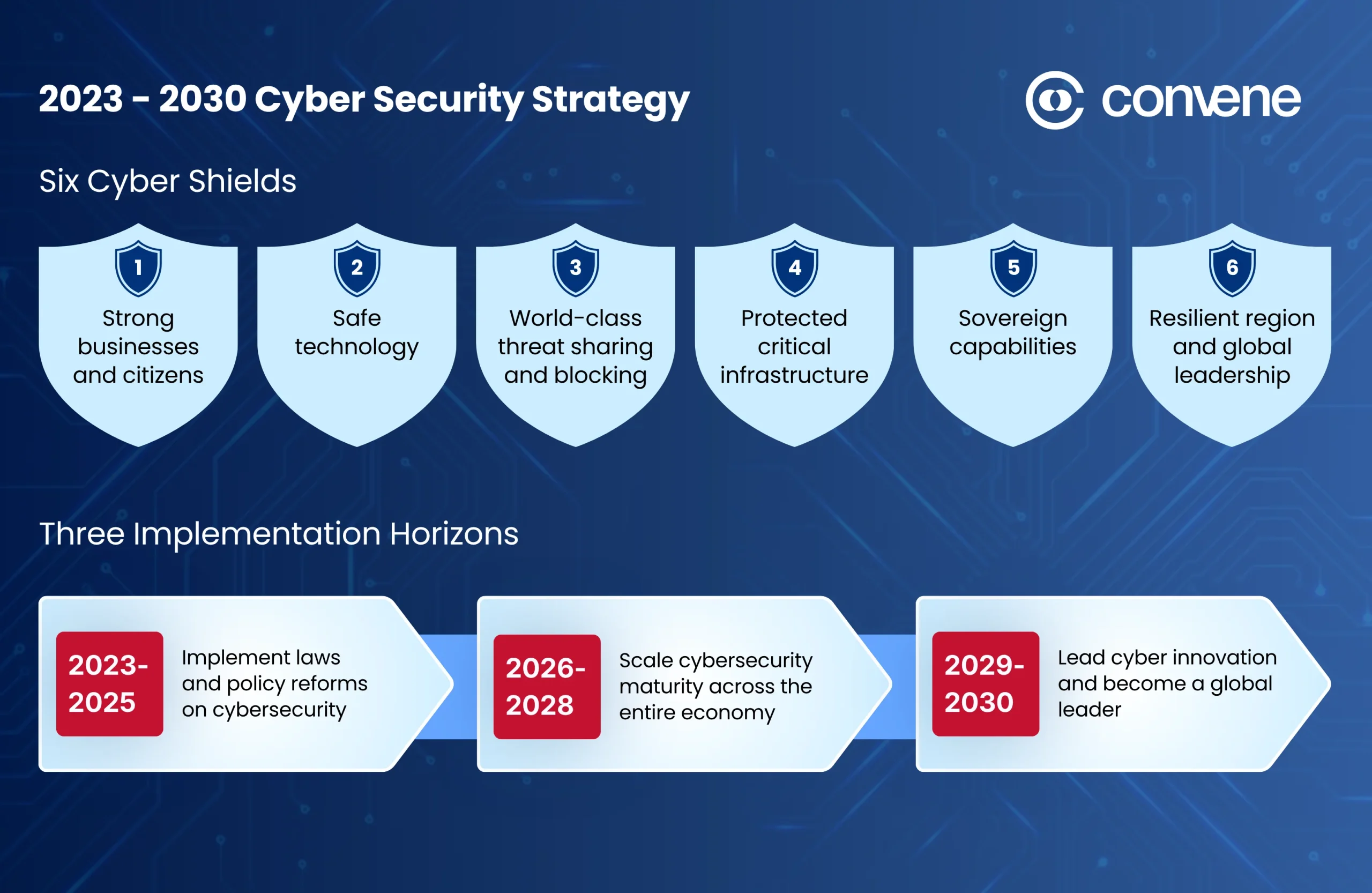
Released in 2023, this is a national roadmap that aims to strengthen Australia’s cyber resilience within its growing digital economy. It fortifies digital environments through its Six Cyber Shields, engaging private and public sectors to take a more coordinated approach to cybersecurity. By 2030, its end goal is to make Australia a global leader in the field.
To achieve this ambitious vision, the strategy is built around six key protective layers and a three-phased growth plan.
Six Cyber Shields
- Strong businesses and citizens
- Safe technology
- World-class threat sharing and blocking
- Protected critical infrastructure
- Sovereign capabilities
- Resilient region and global leadership
Three Implementation Horizons
The strategy uses the Three Horizon Framework to balance the country’s immediate and long-term cybersecurity priorities. Here’s how it plans to develop cybersecurity for the government in the next four years.
- 2023 to 2025: The first phase focused on strengthening Australia’s cybersecurity foundations by introducing law reforms, streamlining reporting processes, and improving incident responses.
- 2026 to 2028: Scale Australia’s cyber maturity by integrating cyber standards and literacy across the whole economy, including small businesses, NFPs, and individuals.
- 2029 to 2030: Lead the development of cyber technologies and become a global leader across the cyber landscape.
Post-Strategy Policy and Legislative Reforms
Following the 2023–2030 Australian Cyber Security Strategy, the Australian government introduced new laws and reforms to better align sectors and the community with the roadmap’s initiatives.
There was the Security of Critical Infrastructure and Other Legislation Amendment (SOCI Amendment Act) in 2024. It added data storage systems as critical infrastructure and required businesses operating in this area to comply with mandatory incident reporting. Additionally, it broadened the government’s authority, enabling it to directly aid businesses during major cyber incidents.
Additionally, the government passed the Cyber Security Act the same year. It mandates ransomware reporting, IoT security standards, and creation of the Cyber Incident Review Board (CIRB).
Together, these strengthen the national cybersecurity framework, unifying incident response for citizens and businesses.

What are the key components to building a strong cybersecurity culture?
To align with Australia’s 2023–2030 Cyber Security Strategy, businesses must build a cybersecurity culture at the organisation level.
Here are essential components for increasing cyber awareness and promoting security practices among employees.
1. Top-down approach to security
Leaders must be stewards of security and act as good role models for employees. They should lead in establishing risk frameworks, implementing AI security policies, and creating internal data governance standards.
Doing so sends a statement that cybersecurity isn’t just a concern of one department but a shared responsibility across all levels. Visibility of the board of directors is crucial to reinforcing governance and accountability, encouraging individuals to adopt strong cybersecurity practices.
2. Clear internal cybersecurity frameworks
Establish clear security policies and procedures to unify the approach across the organisation. Following Australia’s Signal Directorate’s Essential Eight framework, there should be formal procedures for data handling, password creation, incident reporting, and authentication standards.
At the same time, align internal cybersecurity practices with Australia’s legislation, such as the Privacy Act 1998, Cyber Security Act, and SOCI Act, to avoid penalties and ensure board governance meets regulatory and international standards.
3. Company-wide, role-specific security awareness programmes
Design security training programmes tailored to specific roles to ensure that employees receive practical insights relevant to their functions. For example, the finance department can be focused on fraud detection and payment scams, while the IT department handles sensitive data and personal information.
In addition to role-specific training, there must also be company-wide awareness training addressing emerging risks associated with AI, including how it’s taken advantage of for social engineering attacks.
4. Strengthened trust and accountability
Instill a “no-blame” culture so employees feel safer to report suspicious activities or cyber incidents. To avoid inaccuracies when reporting incidents, implement one-click reporting mechanisms that standardise inputs and streamline the submission process. Board portals are secure platforms where boards can store and review incident reports. These guarantee that only authorised users can access sensitive board materials, minimising insider threats.
To boost accountability, boards should establish and make recovery plans and cybersecurity responses accessible to all levels. This would enhance engagement with employees and, at the same time, help them understand their role and responsibility in cyberculture.
Best Practices for Promoting Cybersecurity Culture
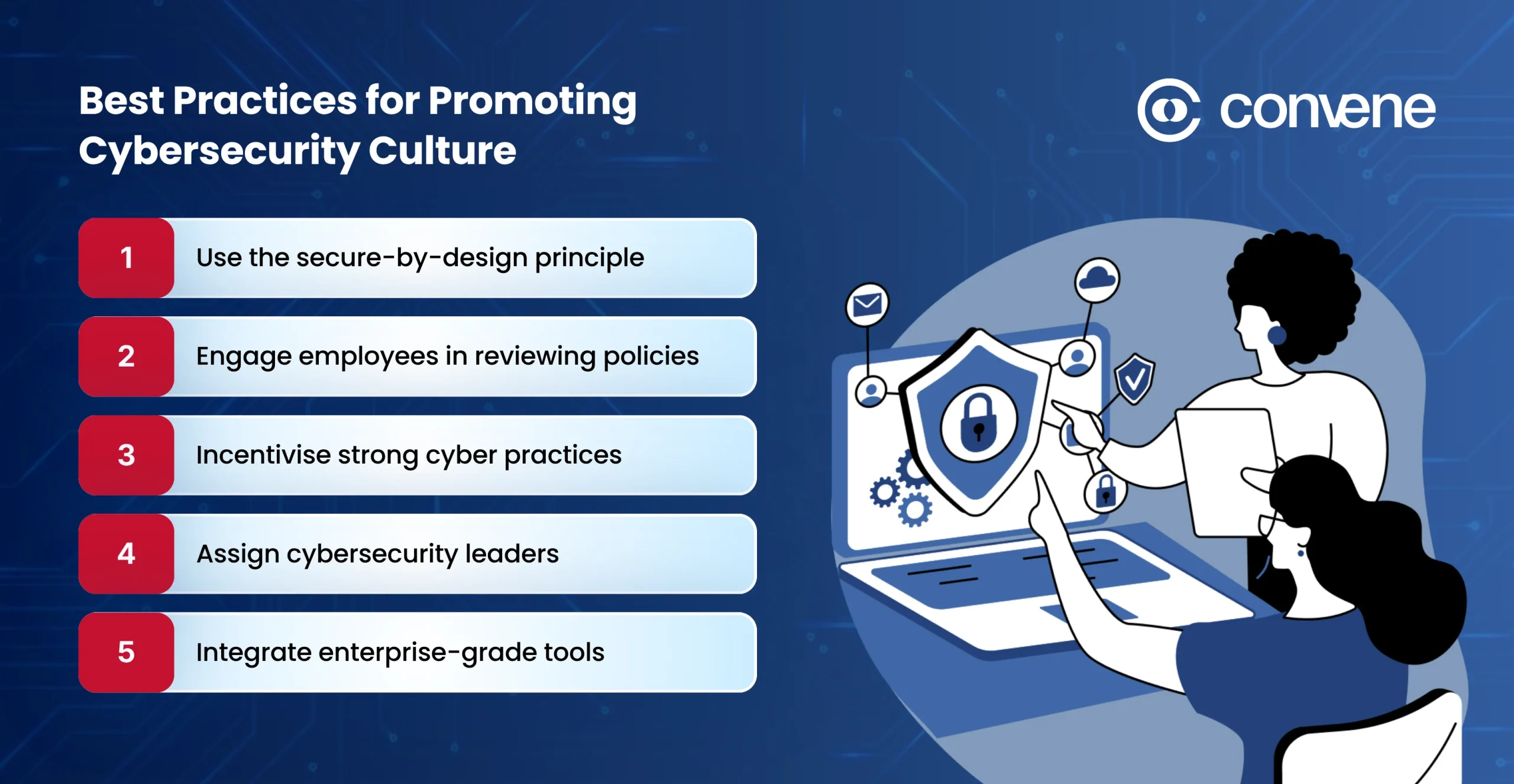
Encourage employees to take an active role in protecting your organisation and its digital assets with these best practices.
1. Use the secure-by-design principle
Secure-by-design refers to building systems, products, or processes that integrate security considerations from the very start. Through threat modelling, continuous testing, and minimising cyberattack surfaces, boards can significantly mitigate cyber risks before they arise.
At the organisation level, design processes that would compel employees to adopt security practices in their daily tasks. Over time, it will become natural for them to consider security precautions before taking any actions.
2. Engage employees in reviewing policies
Fostering a cybersecurity culture is most effective when employees contribute to its development. Engage them to review and update policies. This improves their visibility around security processes and strengthens employee buy-ins, as engagement shows that boards value their inputs.
3. Incentivise strong cyber practices
Employees become more participative if they are recognised and rewarded. Boards can award badges and points to those who’ll complete security training and consistently report phishing and other suspicious activities.
The same strategy can be used to instil security practices in daily operations, such as maintaining strong password hygiene, regularly updating software, or adhering to data security protocols.
4. Assign cybersecurity leaders
Assign cybersecurity leaders across the organisation to help oversee and regulate everyone’s behaviour. Boards can collaborate with these people to guide policy implementation and support awareness training at the ground level, as visibility in this area can sometimes be limited for management.
5. Integrate enterprise-grade tools
Enterprise-grade tools are designed to meet the rigorous standards and complex needs of a large organisation. They usually offer robust scalability, advanced security features, and secure workflows.
In the context of board management, board portals are secure digital platforms that centralise core governance processes, from meetings and digital approvals to document exchange.
These are highly controlled environments that embed secure behaviour directly into governance workflows. For instance, files are automatically encrypted when being sent. They also add extra verification before granting access to accounts through multi-factor authentication (MFA).
What are the benefits of cybersecurity culture to Australian businesses?
Australia’s national cybersecurity roadmap highlights the importance of collaboration among organisations and individuals. For businesses, cybersecurity culture isn’t just regulatory compliance but serves as a foundation for long-term stability and competitiveness.
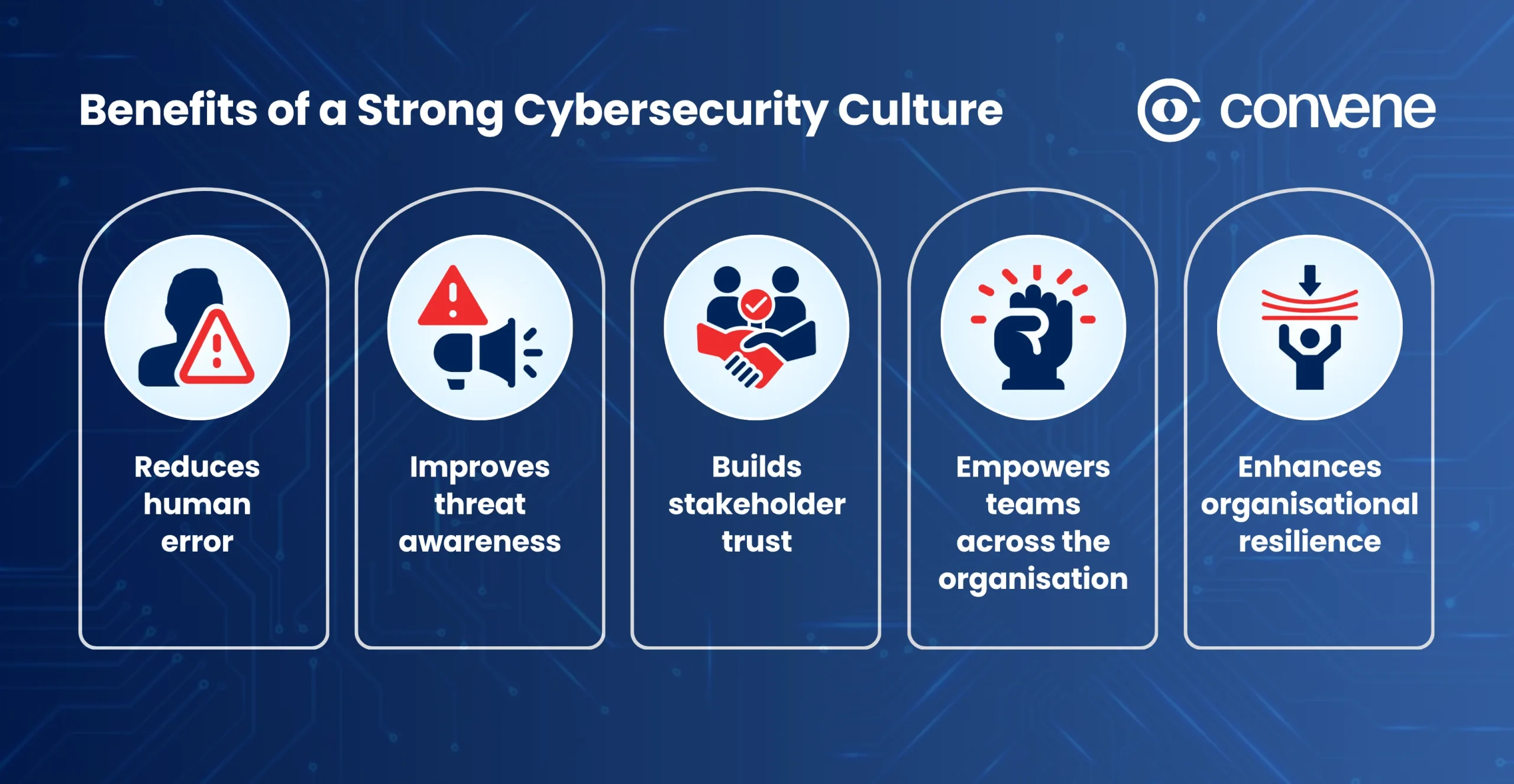
Cybersecurity culture provides the following benefits to businesses:
1. Reduces human error
Security training helps the workforce become a proactive defence rather than the most vulnerable link. Encouraging a security-first mindset enables them to practise secure behaviour in their daily activities, significantly reducing risks of breaches caused by human error.
2. Improves threat awareness
Cyber risks are constantly evolving, and engaging the workforce in continuous training helps enhance situational awareness. It increases attentiveness to warning signs of phishing emails, suspicious links, unauthorised access, and other potential threats, enabling them to respond faster and more effectively.
3. Builds stakeholder trust
A Forbes article notes that “trust is a critical currency in the digital era.” To build trust and enhance competitiveness, an organisation must have a strong cybersecurity posture. Committing to robust security practices reflects how the board of directors prioritises data protection and cyber resilience, which are key factors for clients and partners.
4. Empowers teams across the organisation
Employees are a powerful line of defence due to their adaptability and decisiveness — provided they are given proper training. A strong cybersecurity culture places them at the centre of the ecosystem, empowering them to recognise threats and respond to incidents with greater confidence. By combining human awareness with technology, an organisation can achieve a holistic cybersecurity culture.
5. Enhances organisational resilience
Including cybersecurity in the meeting agenda helps embed it within business strategy. This allows boards to prepare both workforce and technological defences for incidents by creating backup systems and disaster recovery plans, enabling the organisation to recover effectively under pressure.
According to the Harvard Business Review, high-maturity organisations recover from ransomware and breach outages two to three times faster than organisations with low-maturity cybersecurity strategies, underscoring how incident response is critical for business continuity.
Frequently Asked Questions About Cybersecurity Culture in the Australian Government
How can you measure the effectiveness of a cybersecurity culture?
Boards should be able to measure the effectiveness of a cybersecurity culture by assessing if employees consistently demonstrate secure behaviour. Other aspects to evaluate include training completion rates, adherence to internal account management protocols, speed and accuracy of incident reporting, and overall compliance with cybersecurity laws.
How can Australian small and medium businesses (SMBs) build a cybersecurity culture on limited resources?
The Australian government created free services for small businesses wanting to enhance cyber resilience with limited funding. There’s a Cyber Health Check Tool for a free, tailored self-assessment of an organisation’s cyber maturity, beneficial for detecting gaps and opportunities in security.
Another service is the Small Business Cyber Resilience Service delivered by IDCARE. It offers one-on-one sessions to support businesses as they enhance cybersecurity practices or recover from incidents.
From Policy to Practice: Strengthen Cybersecurity Culture with Convene Board Portal
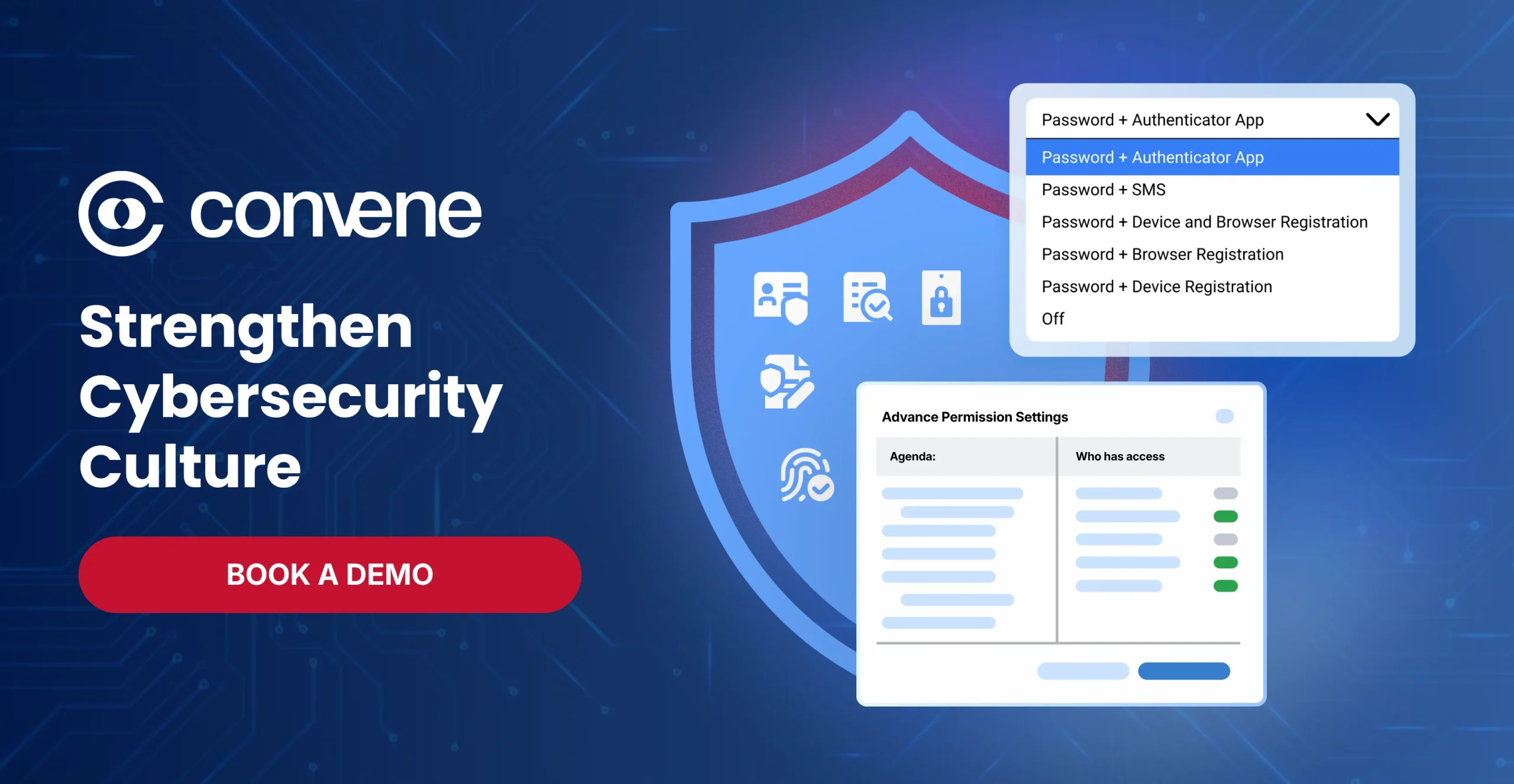
Embed secure practices directly into boardrooms to establish a strong cybersecurity tone from the top.
At the governance level, Convene Board Portal helps reinforce secure behaviour by integrating a strong cybersecurity culture into boardroom processes.
Highly rated by Australian businesses, our enterprise-grade platform provides a controlled digital environment where board members can collaborate and make decisions without compromising security or operational efficiency.
Inside the Convene Board Portal are advanced security features that protect board members at every stage of board communication and workflow.
- Protect data interception when exchanging documents with end-to-end encryption.
- Block unauthorised access to documents or meeting rooms by setting role-based permissions.
- Prevent credential theft and hackers from penetrating accounts with an added layer of verification using multi-factor authentication (MFA).
- Enhance compliance and transparency over document access and user actions through audit trails and activity logs.
- Store organisational data within a robust data hosting infrastructure backed by IRAP-aligned processes.
Integrating these capabilities into daily governance activities supports boards in achieving a lasting culture of security leadership.
Schedule a demo to experience first-hand how Convene Board Portal helps boards achieve the highest level of governance.



Jean is a Content Marketing Specialist at Convene, with over four years of experience driving brand authority and influence growth through effective B2B content strategies. Eager to deliver impactful results, Jean is a data-driven marketer who combines creativity with analytics. In her downtime, Jean relaxes by watching documentaries and mystery thrillers.
- Connect:
-

-