



Key Takeaways:
- The CEO sets the company’s long-term vision, strategy, and external leadership direction, while the president focuses on day-to-day execution and internal operations.
- In most organizations, the president is second-in-command and typically reports to the CEO.
- The CEO serves as the main link to the board, investors, and external stakeholders, while the president leads internal teams.
- In most organizations, the president reports to the CEO, while department heads and vice presidents typically report to the president.
Both the Chief Executive Officer (CEO) and the president hold critical leadership roles in an organization, but what exactly sets them apart?
While the difference between president and CEO may seem minor, it has a big impact on how a company runs and stays on track. To make things clear, let’s look at what each role does and how essential both positions are in leading the organization.
What is a president of a company?
A President is a high-level executive who is in charge of managing the company’s day-to-day operations. Their role is often focused internally, executing strategic plans assigned by the CEO, coordinating teams, and ensuring that daily business functions run smoothly.
Company presidents also supervise other executives and managers, making sure that each department operates effectively and moves according to the set timeline. In some organizations, the president may also serve as the Chief Operating Officer (COO).
What does a president do?
The duties of the president depend heavily on the company’s size and setup. In many cases, the president is second-in-command and usually reports to the CEO. In smaller or private companies, the president may have more authority and sometimes even shares duties with the CEO. In general, they are in charge of the following:
Overseeing daily operations
To ensure daily operations run smoothly, the president must supervise departments, manage internal workflows, and resolve operational bottlenecks before they become problems. They also ensure strict adherence to company policies at all times. Instead of mainly focusing on long-term vision, the president makes sure the business performs well in the present.
Implementing the company strategy
As the CEO sets the overall direction, the president’s role is to turn that vision into practical steps the company can take. For example, if a CEO aims to expand into a new market within the year, the president is often the executive responsible for coordinating all teams involved and ensuring the strategy is carried out effectively across departments.
This may include:
- Setting quarterly priorities
- Allocating internal resources
- Establishing project timelines
- Aligning departmental metrics
- Tracking progress and milestones
Managing internal leadership teams
Presidents manage and work with department heads and other senior managers to keep everyone working towards the same goals. They may regularly meet with them to discuss progress and address obstacles. This is important for connecting daily operations with the company’s broader strategic goals.

Pay and Notoriety
In the United States, presidents are some of the highest-paid executives because they are responsible for how well the company operates and delivers results.
As of March 2026, the average president’s salary in the U.S. reached up to $798,000 per year, but this can vary widely based on the company’s size, industry, and what the role includes.
Beyond base salary, presidents of a company often receive:
- annual performance bonuses
- profit-sharing incentives
- cash-based executive bonuses
- long-term retention incentives
Compared to CEOs, however, presidents usually get less of their pay in stock or equity incentives.
How to Become a Company President
A president is expected to have strong experience in leading operations. That is why in most structures, company presidents are already part of the leadership team or board of directors before being appointed to the role. They often rise through internal leadership ranks after serving as a COO, Executive Vice President, or Head of Operations.
Hiring does not require a specific degree, but candidates with advanced degrees, such as an MBA, are highly preferred. Other qualifications include:
- Extensive senior leadership experience
- Strong financial and operational management skills
- Experience leading cross-functional teams
- Strategic planning and execution expertise
What is a CEO of a company?
The CEO is the top executive in any organization. They are responsible for the company’s long-term direction, growth, and overall success. Unlike a president, the CEO often focuses more on external and strategic matters.
To better understand where the CEO sits within the organization, the image below shows how leadership roles are typically structured:
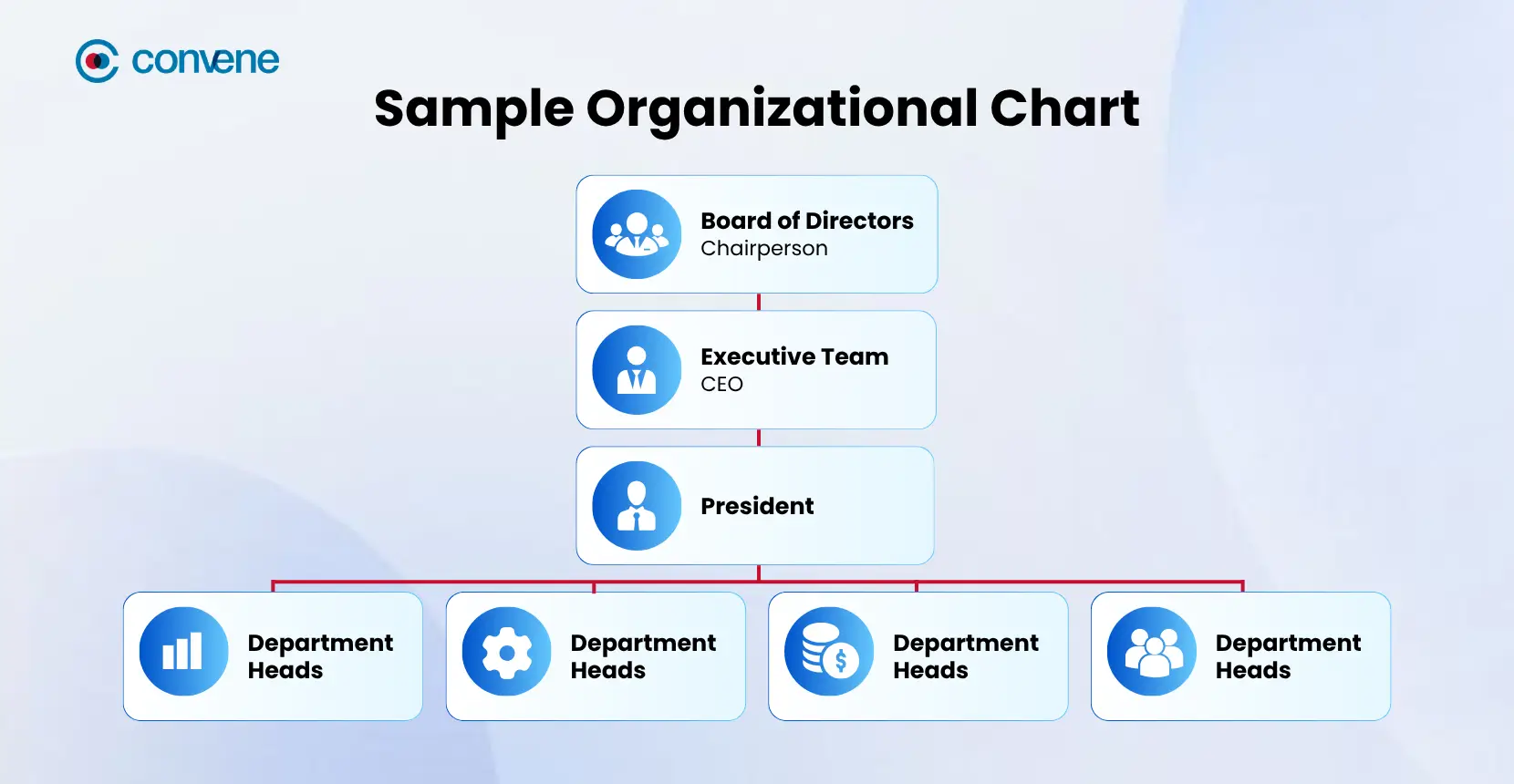
The CEO collaborates closely with the board of directors and works to keep confidence in the company’s leadership and find opportunities for sustainable growth. This may involve forming strategic partnerships, exploring new markets, leading mergers or acquisitions, and making sure the company stays competitive and profitable.
What does a CEO do?
As the top of the corporate hierarchy, the CEO leads the company by setting its overall strategy through:
Defining vision and strategy
The CEO sets the company’s long-term vision and main priorities, which could be launching new business lines, restructuring the organization, or advancing new initiatives. For example, the CEO may prioritize investment in AI-powered product features to stay competitive in the market. This strategic direction influences how resources, leadership focus, and business priorities are aligned throughout the organization.
Providing operational oversight
While the president manages day-to-day execution, the CEO maintains high-level operational oversight to ensure that business functions align with the company’s strategic goals. This role often includes monitoring overall performance, identifying operational risks, and ensuring that all departments are working toward shared objectives.
Building and leading the executive team
The CEO should build, strengthen, and lead the executive leadership team. This includes hiring senior leaders, defining leadership roles, fostering cross-departmental collaboration, and ensuring the organization has the right talent to execute its strategy effectively.
Serving as the link to the board
The CEO is the bridge between the executive team and the board of directors. They regularly update the board on company performance and strategic progress. The CEO also seeks board approval for significant decisions, including acquisitions, leadership appointments, capital investments, and long-term growth initiatives.
Leading stakeholder communication
Being the public face of the company, CEOs work directly with investors, regulators, the media, and partners. For publicly listed companies, the role often includes presenting earnings results, speaking to analysts and shareholders, and communicating major corporate developments. The external visibility distinguishes a CEO from a president, whose responsibilities typically focus more internally.
Pay and Notoriety
The average CEO salary in the United States is approximately $814,200 per year, with higher earnings commonly seen in larger enterprises and publicly listed companies. Long-term equity incentives, such as stock options and equity grants, accompany this figure.
How to Become a CEO
CEOs are often held to the highest standard, as the company’s future direction and long-term success are largely placed in their hands. Because of this, candidates are typically expected to have extensive leadership experience, strong business judgment, and a proven record of driving results. Common qualifications include:
- A bachelor’s degree in business, finance, management, or a related field
- Extensive experience in senior leadership or executive roles like CFO, Managing Director, or President
- Advanced qualifications, such as an MBA or equivalent leadership training
- Demonstrated experience in leading teams, managing risk, and driving profitability
CEO vs President: A Side-by-Side Comparison
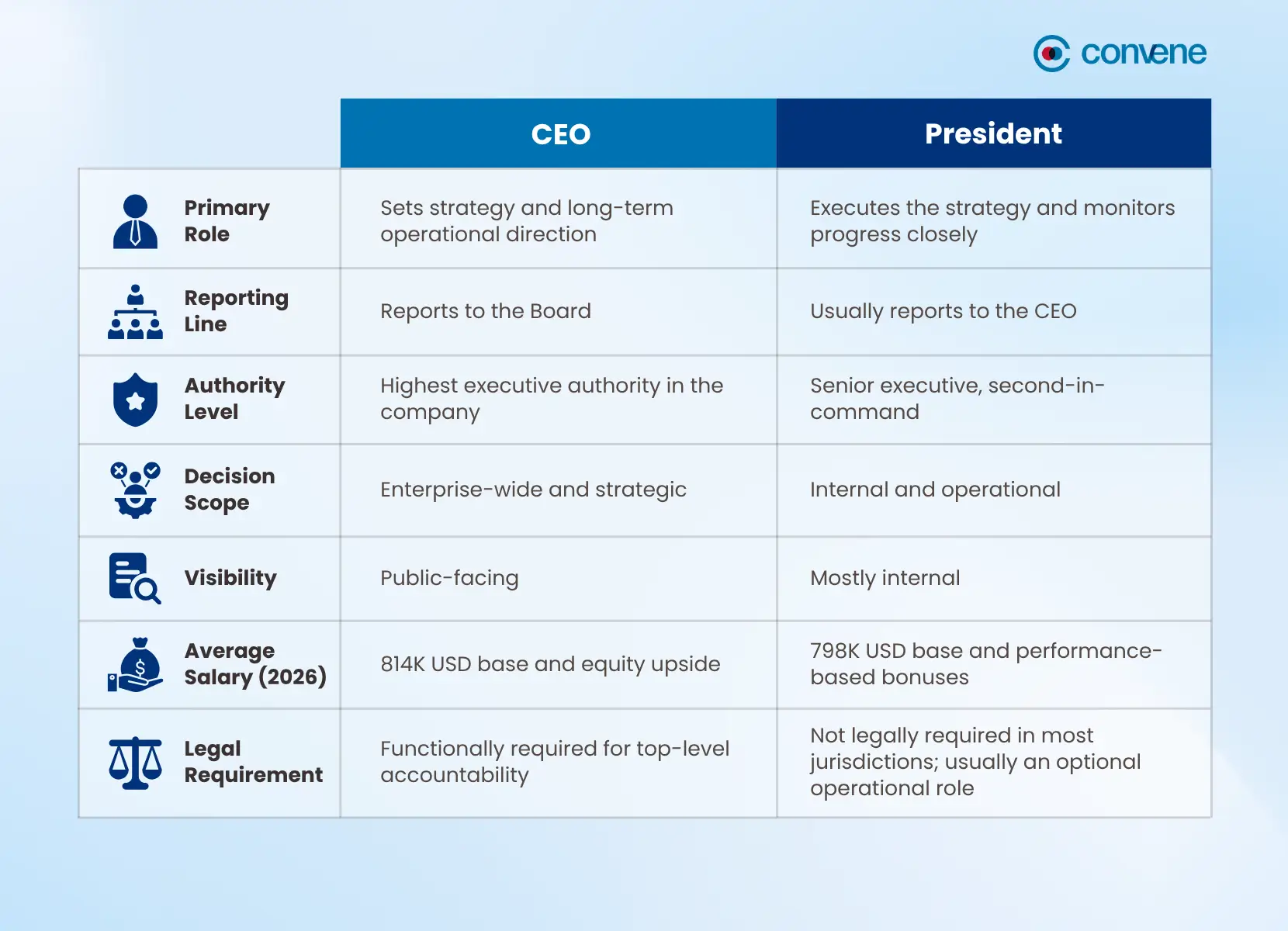
To give you an overview of the difference between a CEO and a president, here is a quick table of comparison:
Frequently Asked Questions
What is higher: CEO or president?
The CEO typically is the highest-ranking executive in the organization, followed by the president.
What’s the difference between a president and a COO?
The president generally focuses on broader business leadership and strategic execution across departments, while the COO oversees the company’s day-to-day operations. Depending on the organization, these roles may be separate or combined under one executive.
Is the owner of a business a CEO or president?
A business owner can be the CEO, the president, or both. This always depends on the company’s size and leadership structure.
Can one person be both president and chief executive officer?
Yes, it’s entirely possible for a single individual to wear both hats. This is often seen in businesses where the founder is still heavily involved, as well as in private companies. One good example here is Walmart Inc.’s John Furner, who has served as both the company’s president and CEO since early 2026.
What are the upsides and downsides of this dual role?
When one person handles both strategic and operational responsibilities, it can streamline processes and improve alignment between the two. This can reduce communication problems and speed up decision-making. However, as organizations grow, combining these roles can lead to overload, ultimately decreasing operational focus.
How Convene Board Portal Supports Leadership and Governance
Strong leadership relies on clear executive roles and effective communication between management and the board. An all-in-one board solution like Convene Board Portal helps bridge the gap between strategic oversight and operational execution by giving leadership teams secure access to the information they need to make informed decisions.
With Convene, organizations can:
- Centralize board documents and materials in a secure and easily accessible Document Library.
- Enable real-time collaboration through live video conferencing and annotations.
- Improve decision-making with Review Rooms and Resolutions, which are accessible even outside meetings.
- Ensure all sensitive information is protected through Convene’s strong security features.
It doesn’t end there. Boards can also use Convene AI to automate minutes and summarize discussions for quicker follow-up. Less time on admin tasks means more time to focus on achieving results.
Your leaders need support. Find out how Convene can help your organization lead with clarity and confidence by booking a one-on-one demonstration today.



Jess is a Content Marketing Writer at Convene who commits herself to creating relevant, easy-to-digest, and SEO-friendly content. Before writing articles on governance and board management, she worked as a creative copywriter for a paint company, where she developed a keen eye for detail and a passion for making complex information accessible and enjoyable for readers. In her free time, she’s absorbed in the most random things. Her recent obsession is watching gardening videos for hours and dreaming of someday having her own kitchen garden.
- Connect:
-