


Key Takeaways:
- A vision statement defines an organization’s long-term future state. Its purpose is to publicly declare what the entity aims to become or achieve.
- To write an effective vision of an organization, it should be future-oriented, aspirational, concise, unique, and achievable.
- A vision statement describes the company’s desired future state, while a mission statement explains its current purpose.
Building a company from the ground up typically begins with a product or service idea. This, however, requires a bigger picture of what the company could become. This is where creating a clear vision statement comes into play.
A new or existing business needs a vision that will equally inspire teams and keep the momentum towards its goals. This guide explores everything you need to know about a vision statement—whether you’re creating a new one for your startup or need a more actionable vision for your current business.
What is a vision statement?
A vision statement is one of the most important business documents, used to guide a company towards the future. It acts as a crucial guiding beacon in what direction the business can go in terms of planning and executing strategies to achieve its long-term goals. The purpose of a vision statement is also to provide the stakeholders with a clear view of what the business stands for. It also serves as a motivational guide for employees, providing a clear direction for their efforts.
Why is a vision statement important?
A vision statement is important because it gives a clear, inspiring long-term direction for the organization. Some companies opt not to have a vision statement, often due to morphing it into a mission statement as one business document. Others even treat it as a vague statement without a real purpose.
A strong vision statement can do wonders for growing businesses of any size and industry. Most importantly, it guides the operations and teams within the company towards the right track.
What is the difference between vision and mission?
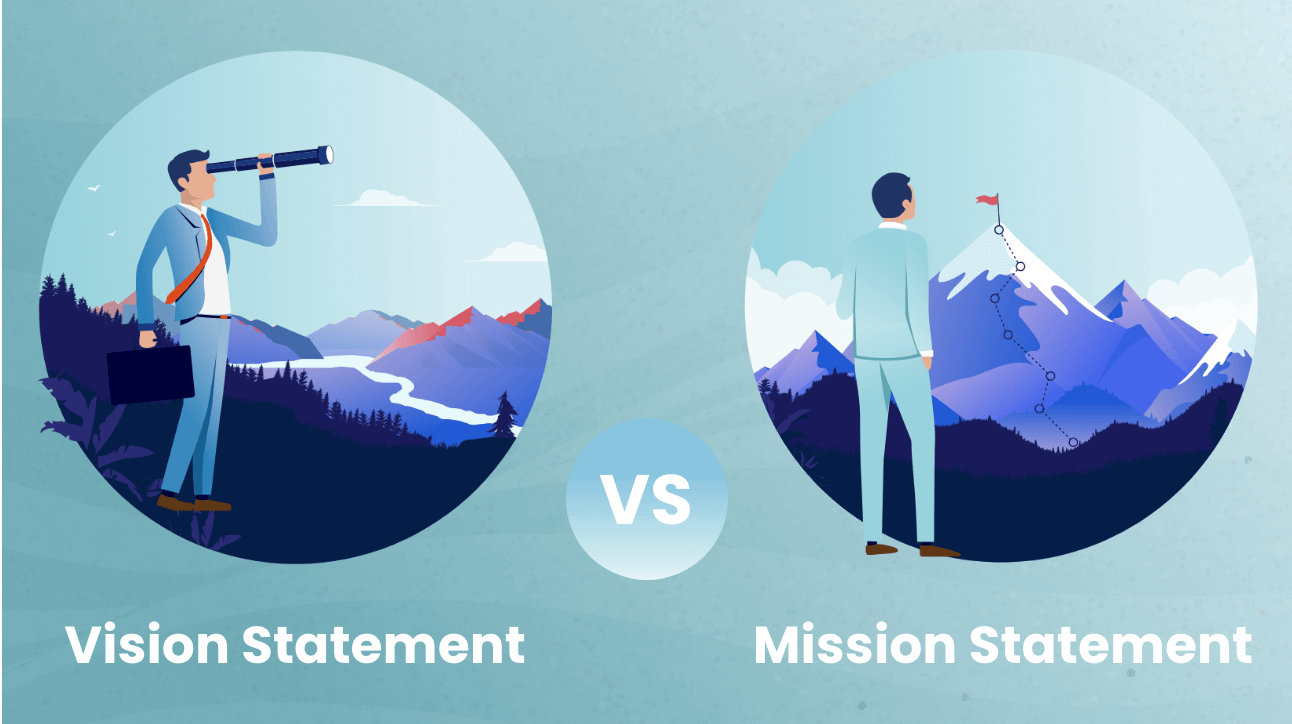
A vision describes the company’s desired future state or what it ultimately aims to achieve. On the other hand, a mission explains the company’s current purpose, like what it does, who it serves, and how it creates value.
- Vision = the future you want to reach.
- Mission = what you do today to get there.
Related Reading: Vision Statement vs. Mission Statement: The Key Differences and Why They Matter
Key Characteristics of a Strong Vision Statement
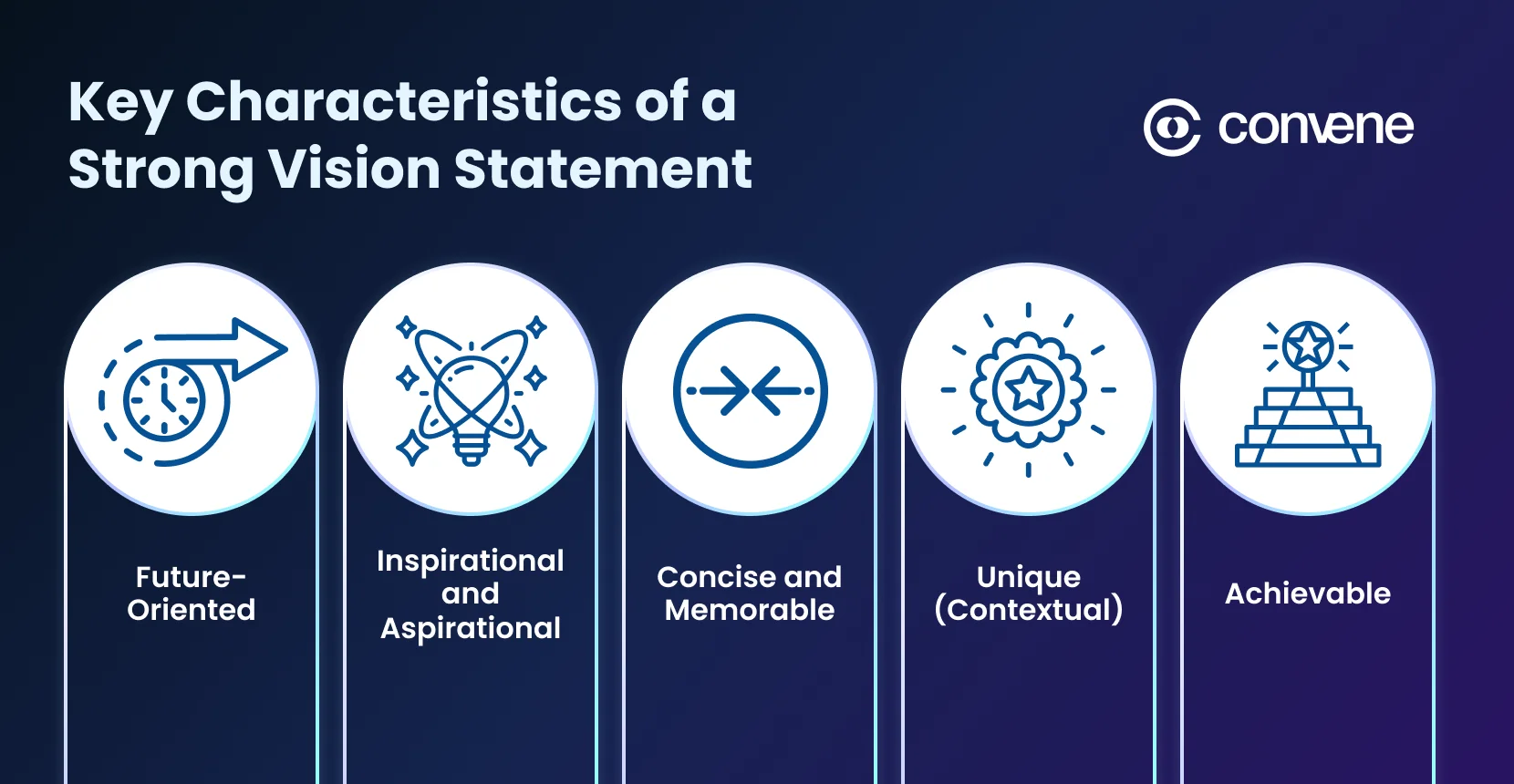
A strong vision statement can act as your company’s long-range navigation system. Hence, it is imperative that your vision is clear, actionable, and exhibits these key characteristics:
1. Future-Oriented
One important element of an effective vision statement is being time-bound. Ideally, it should include a clear future condition that the company intends to reach, typically 5 to 10 years ahead. A strong vision statement must reflect measurable characteristics. This guides executives and leaders to determine whether current investments and resources align with the vision.
For example, “By 2030, we (the Company) will deliver zero-carbon cloud computing across all global data centers.” A clear future-oriented statement also enables boards to benchmark progress against a clearly defined trajectory.
2. Inspirational and Aspirational
If your vision statement does not drive intrinsic motivation, you’re likely doing it wrong. A strong vision should trigger emotional resonance and internal commitment, and not just intellectual understanding. The goal is to create a vision that conveys a collective ambition, and that employees can better respond to.
Having an aspirational vision doesn’t translate to vague. This means you need to frame a vision beyond the firm’s current capability boundary, while staying strategic. For instance, SpaceX, a private American aerospace and space transportation company, has the vision of “making life multiplanetary”. This is a perfect example of vision statement that is aspirational — yet also anchored in the company’s documented engineering roadmaps.
3. Concise and Memorable
A vision statement shouldn’t just be time-bound and inspirational, but also memorable. You want a vision that your employees and stakeholders can recall easily and accurately. Keep it short and catchy.
In most cases, high-performing entities maintain vision statements within 10 to 20 words—without jargon or multi-clause sentences. Google’s early vision, “to provide access to the world’s information in one click”, is an example of a concise and memorable vision that everyone can easily remember. This also prevents the statement from being misinterpreted or twisted.
4. Unique (Contextual)
Another critical element of a strong vision statement is uniqueness. You’d want your vision to be context-specific while still reflecting competitive and industry realities. You also want to ensure that it cannot be pasted onto any other organization. A unique vision statement should be grounded in:
- the company’s market position,
- industry constraints,
- regulatory environment,
- customer segment, or
- geographic context.
One example of vision statement that is context-specific is “By 2030, we will deliver offline-first digital skills credentials for remote First Nations learners across Australia.” This statement is not just contextually rooted but also geographically and culturally specific (“First Nations learners”).
5. Achievable
Last but not least, a vision statement must be bound by ambition—yet based on the organization’s capability and market reality. This can be done by evaluating feasibility gates, capability maturity, regulatory limits, and financial capacity. If your vision isn’t grounded in such realities, it could result in:
- misallocated capital,
- unrealistic investor expectations, and
- internal disengagement.
For instance, if you’re running a fintech, you cannot realistically claim that you will eliminate financial fraud worldwide. However, you can aim to reduce transaction risk for APAC merchants by 60% within the next decade using AI-driven fraud detection.
How to Write and Update a Vision Statement for Startups and Businesses
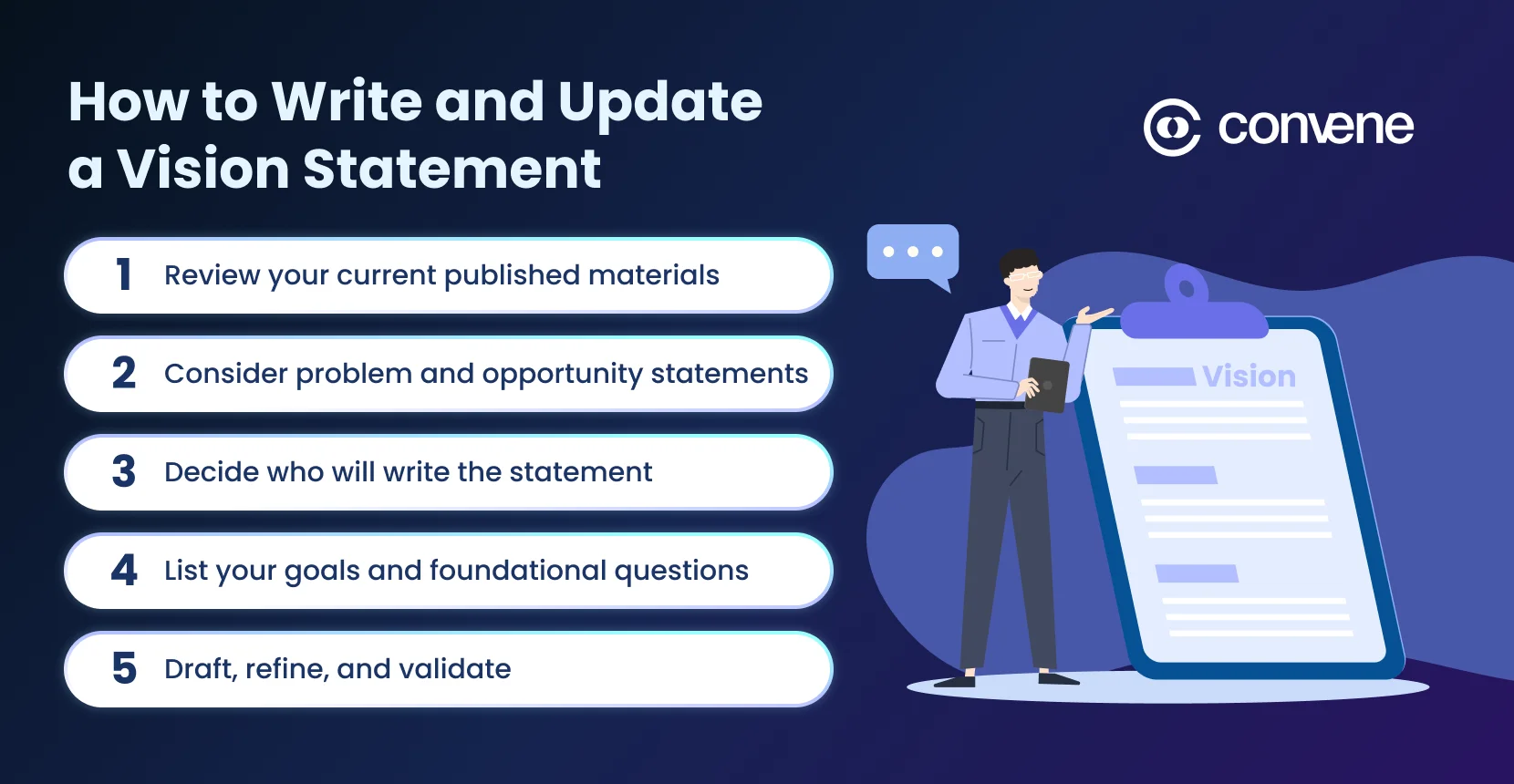
A vision statement is more than just a motivational tagline, but it can also act as your company’s compass towards the future. Here are some key steps on how to craft a strong vision statement.
1. Review your current published materials
The first thing to do is conduct a document audit of the company’s publicly available materials. This includes previous vision and mission drafts, strategic plans, financial or ESG disclosures, and regulatory filings. Your goal is to determine:
- Existing strategic language, like industry positioning or growth themes.
- Implicit values and long-term objectives that the firm may not have formalised.
- Stakeholder expectations, particularly if your sector is strictly regulated.
Doing this ensures your company’s new vision aligns with your documented identity. At the same time, this avoids contradictions that may impact stakeholder trust.
What does this mean for:
- Startups: Ensures the first vision statement for creation does not contradict how the business is already presented.
- Rebranding Businesses: Make sure the refreshed vision corrects outdated brand messaging.
2. Consider problem and opportunity statements
Before you consider writing the vision statement, have a good sense of your organization’s problems and opportunities. Specifically, dive into the types of macro-level challenges your organization may be facing, such as cybersecurity challenges, workforce shortages, subpar issues, and declining stakeholder trust. Next, search for opportunities such as emerging technology, sustainability requirements and trends, or demographic shifts that can create organizational growth.
What does this mean for:
- Startups: Helps anchor the vision in real market needs and opportunities while preventing unfocused goal-setting.
- Rebranding Businesses: Grounds the new vision in current challenges and trends for future readiness.
3. Decide who will write the statement
Identifying who will help create and refine your vision statement is a critical step you shouldn’t skip. Have a designated party to draft and finalize the statement. Actively involve board members and key stakeholders by getting their input, while also ensuring their priorities and perspectives are reflected in the vision. Set clear guidelines for the entire process, from timelines, key objectives, to the actual criteria for success.
What does this mean for:
- Startups: Makes it easier to create a unified direction that reflects the new business’s core intent.
- Rebranding Businesses: Guarantees that stakeholder voices will shape the new vision, balancing legacy identity with future goals.
4. List your goals and foundational questions
Before drafting your vision, gather a structured set of long-term goals and answers to the foundational strategy questions. A few examples of such questions are:
- What ideal future state do we want to create for our stakeholders?
- What impact do we want to have on society, the market, or our industry?
- What capabilities do we need to develop to get to that future?
- What does success look like in 10-20 years?
This approach mirrors the strategic intent framework that management scholars Gary Hamel and C.K. Prahalad use. It ensures that the vision statement will be linked to measurable strategic outcomes and organisational capacities, rather than aspirational fluff.
What does this mean for:
- Startups: Clarifies long-term aspirations so the vision will guide the business’s growth instead of hindering it.
- Rebranding Businesses: Re-establishes long-term goals so the refreshed vision reflects the company’s evolved brand.
5. Draft, refine, and validate
You are now ready to draft the vision statement, and you’d want it to be:
- Concise (one to two sentences)
- Forward-looking (describing an ideal future state)
- Outcome-oriented rather than operational
- Aspirational but plausible
Once you have drafted it, you’ll need to create a process to circulate the vision statement for validation. Validation usually involves:
- Executive and board review
- Stakeholder testing (e.g., surveying employees, customers, or donors)
- Compliance and reputational checks
Refine the draft based on the feedback and then get approval through the appropriate governance structure.
What does this mean for:
- Startups: Confirms the early vision resonates with customers and can scale as the business matures.
- Rebranding Businesses: Ensures the refreshed vision is credible, mission-aligned, and accepted across stakeholder groups.
10 Vision Statement Examples from Top Companies
If you’re still stuck on drafting, take a look at these vision statement examples from top companies worldwide.
1. Amazon
“To be Earth’s Most Customer-Centric Company, where customers can find and discover anything they might want to buy online.”
2. Apple
“To make the best products on earth, and to leave the world better than we found it.”
3. Tesla
“To create the most compelling car company of the 21st century by driving the world’s transition to electric vehicles.”
4. Microsoft
“To help people and businesses throughout the world realize their full potential.”
5. Google
“To provide access to the world’s information in one click.”
6. Disney
“To be one of the world’s leading producers and providers of entertainment and information.”
7. LinkedIn
“Create economic opportunity for every member of the global workforce.”
8. IKEA
“To create a better everyday life for the many people.”
9. Facebook (Meta)
“To bring the metaverse to life and help people connect, find communities, and grow businesses.”
10. NVIDIA
“To enable a world where everyone can experience the power of AI.”
Frequently Asked Questions About Vision Statement
Is a vision statement a legally binding document?
No. A vision statement is not legally binding and is only included in internal governance documents—not in legal filings. In other words, it doesn’t create enforceable obligations under corporate or contract law.
How often should a vision statement be reviewed or updated?
A vision of an organization must be reviewed during major strategic planning cycles —typically every 3-5 years. It should only be revised when there’s a significant shift in the organization’s long-term goals or market conditions.
Who should be involved in creating the vision statement?
The initial creation and development of a vision statement is usually led by executives and the board. Input from stakeholders like senior management and employees should also be considered. The approval of the vision statement usually falls under the company’s board or executives.
Can an organization have more than one vision statement?
Generally, no. Having a single, unified vision statement ensures the organization runs in strategic cohesion. However, some large companies establish supplementary “vision pillars” or departmental visions—all of which must still align with the vision statement.
Can a company operate without a vision statement?
Technically speaking, yes. But this often defaults into short-termism, wherein the organization only prioritizes immediate profits or rewards. Operating without a vision may also result in decisions revolving around firefighting or budget cycles. Hence, creating drift rather than direction.
Turning Your Vision into Action with Convene Board Portal
It is always a struggle for organizations to turn their aspirational vision into concrete outcomes, and can often be a bottleneck to success. Some spend countless hours on planning, wherein decisions get delayed, and action items are overlooked. This is why investing in a modern system like board portals is ideal.
Convene, a leading board portal, is designed to centralize all aspects of governance, from meeting logistics to follow-through. Your boards and teams can now move quickly and on purpose with your vision. From setting the right agenda items, voting on resolutions, to streamlining and tracking workflows, all in one secure platform.
How can Convene help turn your vision into action?
- Agenda Building on Autopilot: Create agendas via drag-and-drop, get access to custom agenda and meeting minutes templates, and easily track meeting pack amendments.
- Meetings That Move in Sync: Collaborate in real time with tools like Page Synchronization and Shared Annotations, and take live meeting minutes and notes without the need to switch to a different app.
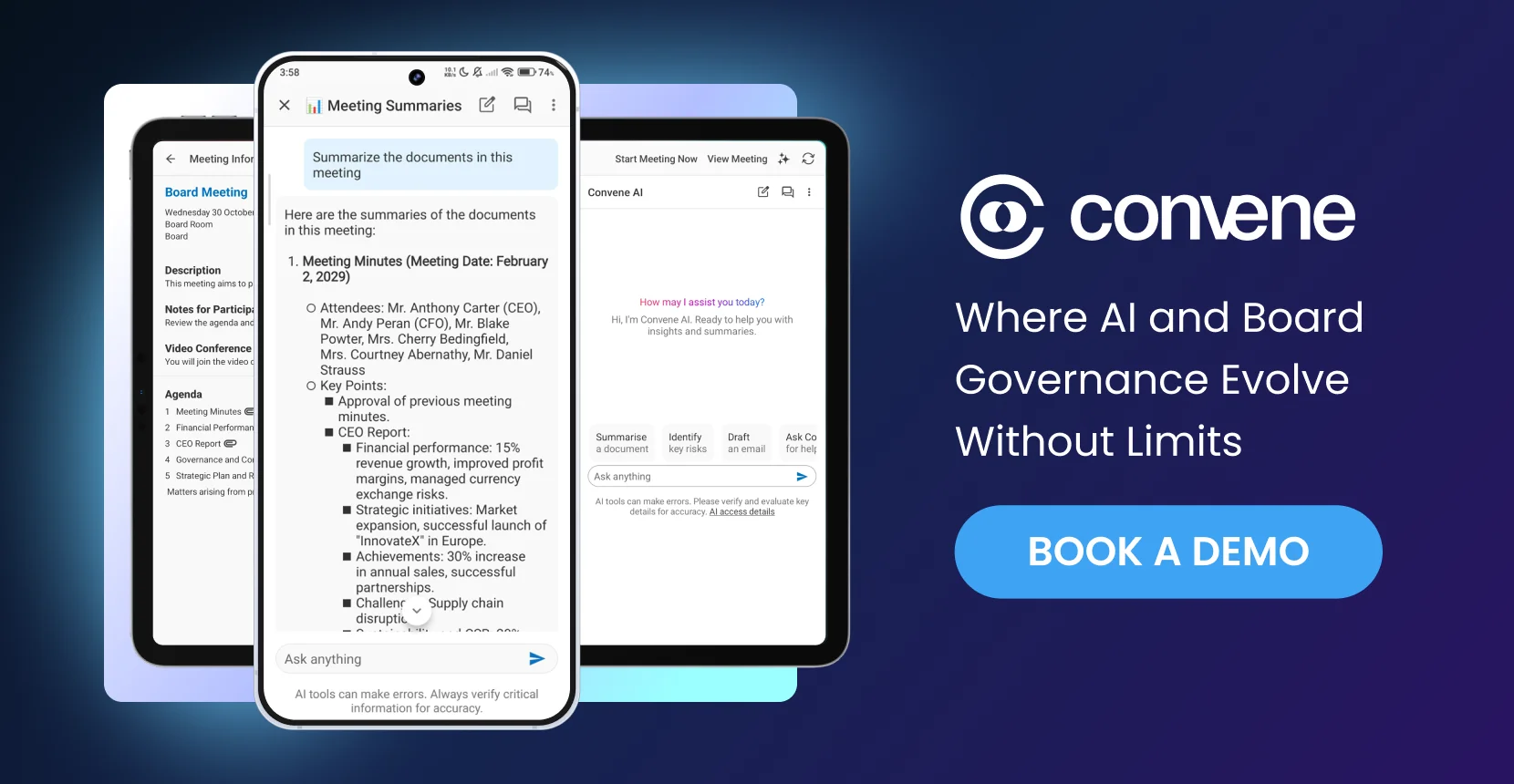
- AI That Turns Talk Into Traction: Get access to AI-generated meeting summaries and automated action item creation with Convene AI, powered by AWS Bedrock and ethical data practices.
- Decisions That Flow Securely: Vote, approve, and sign off from anywhere using Convene’s voting workflow and integrated digital signature solutions like Adobe Sign and DocuSign.
Learn more about Convene’s features and book a demo today!



Jielynne is a Content Marketing Writer at Convene. With over six years of professional writing experience, she has worked with several SEO and digital marketing agencies, both local and international. She strives in crafting clear marketing copies and creative content for various platforms of Convene, such as the website and social media. Jielynne displays a decided lack of knowledge about football and calculus, but proudly aces in literary arts and corporate governance.
- Connect:
-

-