


Key Takeaways
- AI adoption is accelerating across organizations, and its increasing autonomy introduces higher operational, ethical, and compliance risks. For the board of directors, this elevates the need for stronger, more continuous oversight.
- AI automation governance steps in as traditional corporate governance models are no longer sufficient to manage complex AI systems, ensuring that autonomous systems operate responsibly with clear accountability, real-time monitoring, and consistent control.
- The five key principles of AI automation governance are transparency, accountability, control, compliance, and culture.
- To promote effective AI governance, boards must establish an AI governance committee, integrate clear decision-making structures, define AI boundaries, and leverage human oversight.
- Convene Board Portal functions as a command center for centralized governance operations. It supports organizations in transitioning to dynamic governance by consolidating data management, streamlining policy approvals, and enabling real-time compliance tracking.
AI automation is rapidly gaining momentum across modern businesses for its ability to make and execute decisions with minimal human intervention. Why is automation important? At its core, AI automation relieves organizations from repetitive tasks, boosting operational efficiency and reducing human error.
However, this innovation also introduces new challenges. As more workflows embed AI automation, organizations must also ensure their AI governance can match the speed and complexity of these systems.
This article explores the growing importance of robust AI automation governance. Learn why it matters, the common challenges boards face, and the best practices for its effective implementation.
What is AI automation governance?
AI automation governance is a framework that ensures autonomous systems operate safely and ethically throughout their lifecycle. It consists of policies, control mechanisms, and software guardrails that define the scope and limitations of its operations.
In simple terms, AI automation governance establishes who is responsible for governance, identifies associated risks, and guides organizations in mitigating and controlling those risks effectively.
Unlike generative AI, which is adopted to create outputs, AI automation systems are designed to execute tasks based on predefined rules. For instance, a customer service system may process refunds after conducting a sentiment analysis and determining that the client’s claim matches the established conditions.
What happens if there’s no AI automation governance? The system could mistakenly process fraudulent refunds disguised as legitimate transactions. Autonomous systems are prone to these types of errors, which is why boards need to promote stronger oversight and accountability.
Why do autonomous AI systems require stronger governance?
As organizations deploy more autonomous AI systems, the need for formal governance becomes critical for enhancing logical reasoning, risk management, and accountability.
Poor explainability
Autonomous systems are at high risk of “black box decision-making” or producing outputs that lack clear reasoning. Some common examples are denying loan applications and canceling services without proper and sufficient justification.
AI automation governance standardizes metrics and disclosure guidelines that make autonomous systems more auditable and transparent, thereby enhancing explainability.
Risks scale rapidly
Like traditional AI, autonomous systems can also amplify incorrect decisions, biased outputs, or software vulnerabilities. Without robust AI governance, these risks can scale and spread rapidly across the organization, making it harder to mitigate and reverse.
An AI governance framework provides a structured approach to improve AI’s decision-making. By placing anomaly detection and escalation triggers, there are added layers of validation and oversight that reduce AI bias and hallucination.
Unclear accountability
Autonomous AI systems diffuse accountability from their developers and operators because they perform independently, and the only way to manage such situations is through governance.
An AI control framework defines who owns the system, including roles, responsibilities, and escalation procedures. By adding a human-in-the-loop (HITL), stakeholders are guaranteed there’s a clear accountability structure and proper incident response.
What are the essential principles of AI automation governance?
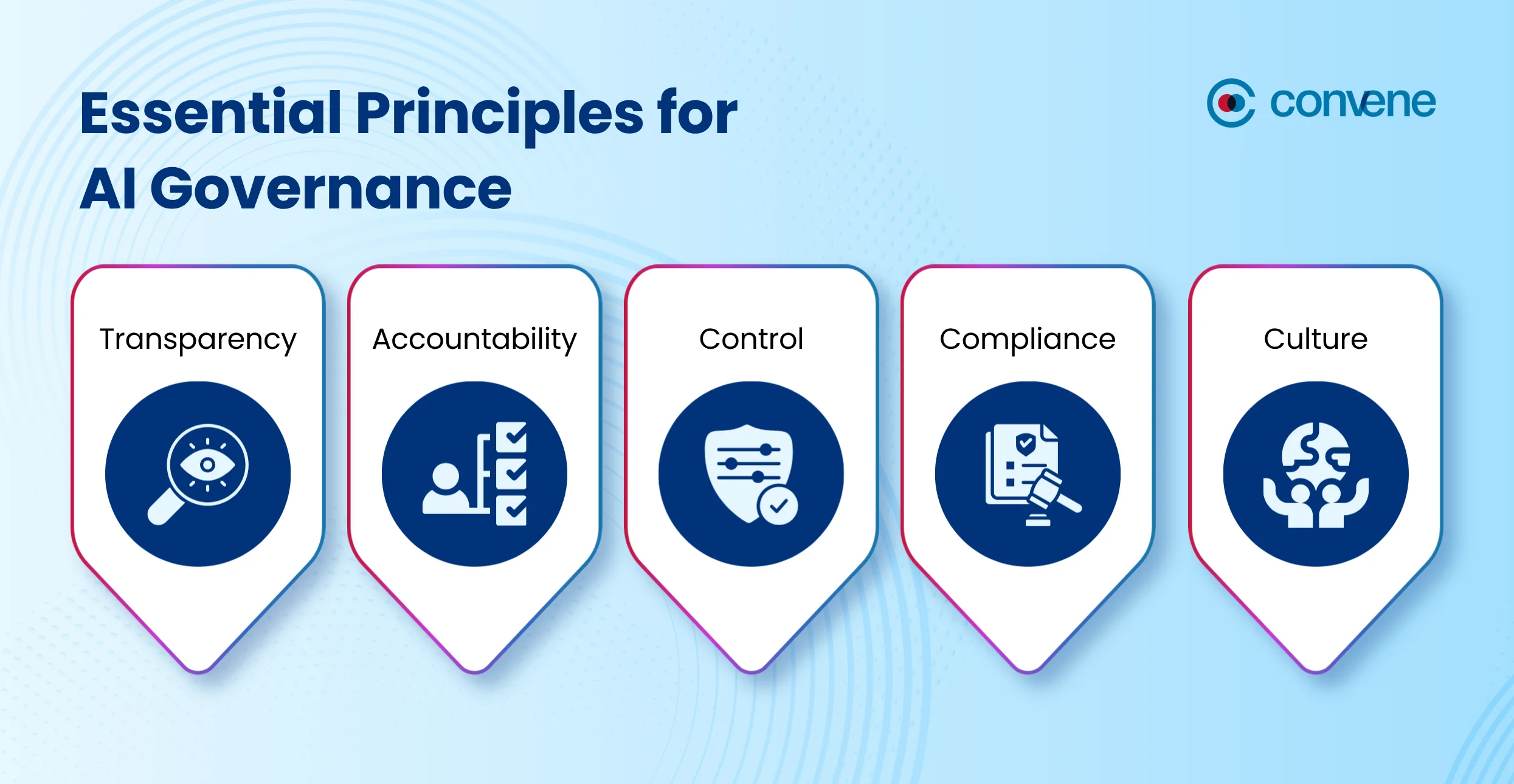
Here are five essential principles to ensure ethical and responsible AI automation governance.
1. Transparency
AI automation systems must explain the logic or reason behind their decisions in a way that is comprehensible for both technical and non-technical stakeholders to understand.
For example, the OECD, through its AI Principles, requires AI actors to be transparent and responsible in disclosing their AI systems. Particularly, it demands plain and easy-to-understand information regarding the data, factors, and processes that affect the AI outcomes.
2. Accountability
AI accountability should be embedded into the governance framework to ensure everyone understands their role when errors, risks, or violations arise.
Deloitte reinforces this in its AI Governance Roadmap, recommending organizations to define ownership of AI oversight at the board level. This could be by forming a full AI board or reassigning to an existing committee.
3. Control
There must be mechanisms so that AI task owners retain meaningful control over systems, enabling them to stop, correct, or override actions. This includes implementing strong data governance practices that define how data should be collected, stored, and controlled, especially during AI training and decision-making.
According to the EU AI Act, businesses must establish auditable and controlled environments for AI, particularly in high-risk situations.
4. Compliance
AI automation systems must embed proactive compliance monitoring to meet evolving regulatory requirements. The shift is occurring in more countries as they move beyond voluntary, principle-level AI guidelines towards more technical, structured laws.
The introduction of hard laws, such as the EU AI Act, the Artificial Intelligence and Data Act (AIDA) in Canada, and emerging state-level AI regulations in the United States, demonstrates this transition towards legally binding AI governance frameworks.
5. Culture
AI governance automation requires human coordination as much as technical control. Even the best policies are likely to fail if the organizational culture doesn’t support their implementation.
To encourage responsible behavior across leadership and the wider organization, boards should invest in AI literacy. By strengthening their understanding of how AI operates, individuals can better apply fairness, transparency, and accountability to their daily decisions and work.
Key Risks of AI Automation Systems that Boards Should Know
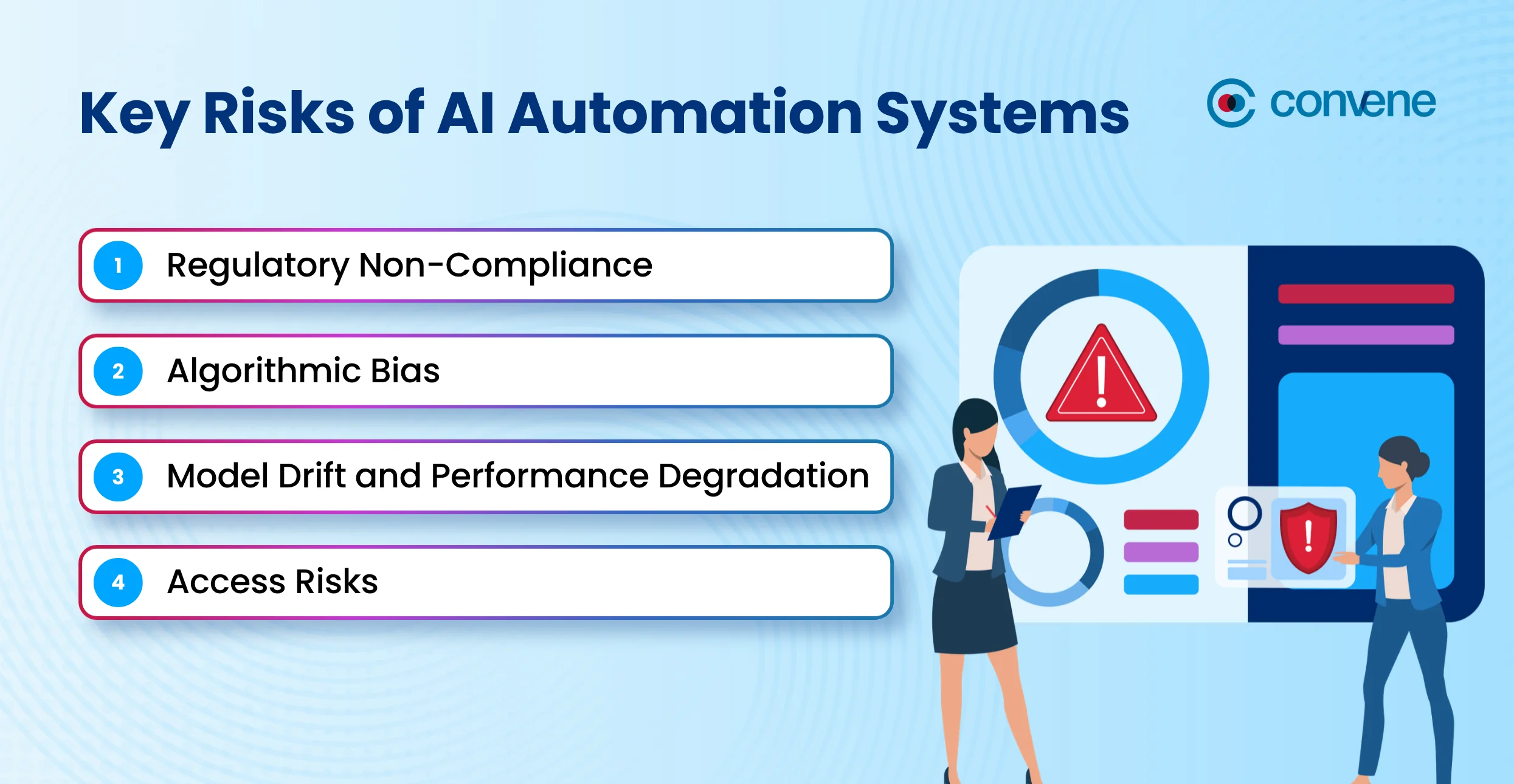
Governing AI automation systems requires the boards to oversee the following key risks that can impact compliance, operational integrity, and business continuity.
1. Regulatory Non-Compliance
AI capabilities evolve rapidly, often outpacing existing legal frameworks. This increases the risks of deploying undocumented or unethical AI models that can create harmful outputs, compliance gaps, or data privacy concerns.
2. Algorithmic Bias
AI systems train on existing data that may contain biased or discriminatory patterns from their developers. If left unfiltered, these biases influence AI-driven decisions, particularly in areas that involve hiring, lending, insurance, customer service, law, and healthcare.
3. Model Drift and Performance Degradation
AI automation models are prone to model drift and performance degradation if they are not reviewed and updated consistently. As workflows, data, or operational configurations change, models may drift and operate outside their intended purpose.
4. Access Risks
When AI automation models perform tasks outside their scope, the likelihood of them interacting with other internal or external IT/OT environments creates significant access risks. As a result, they may gain access to unauthorized data, trigger other workflows, or compromise critical digital infrastructures.
What are the governance challenges in AI-driven automation?
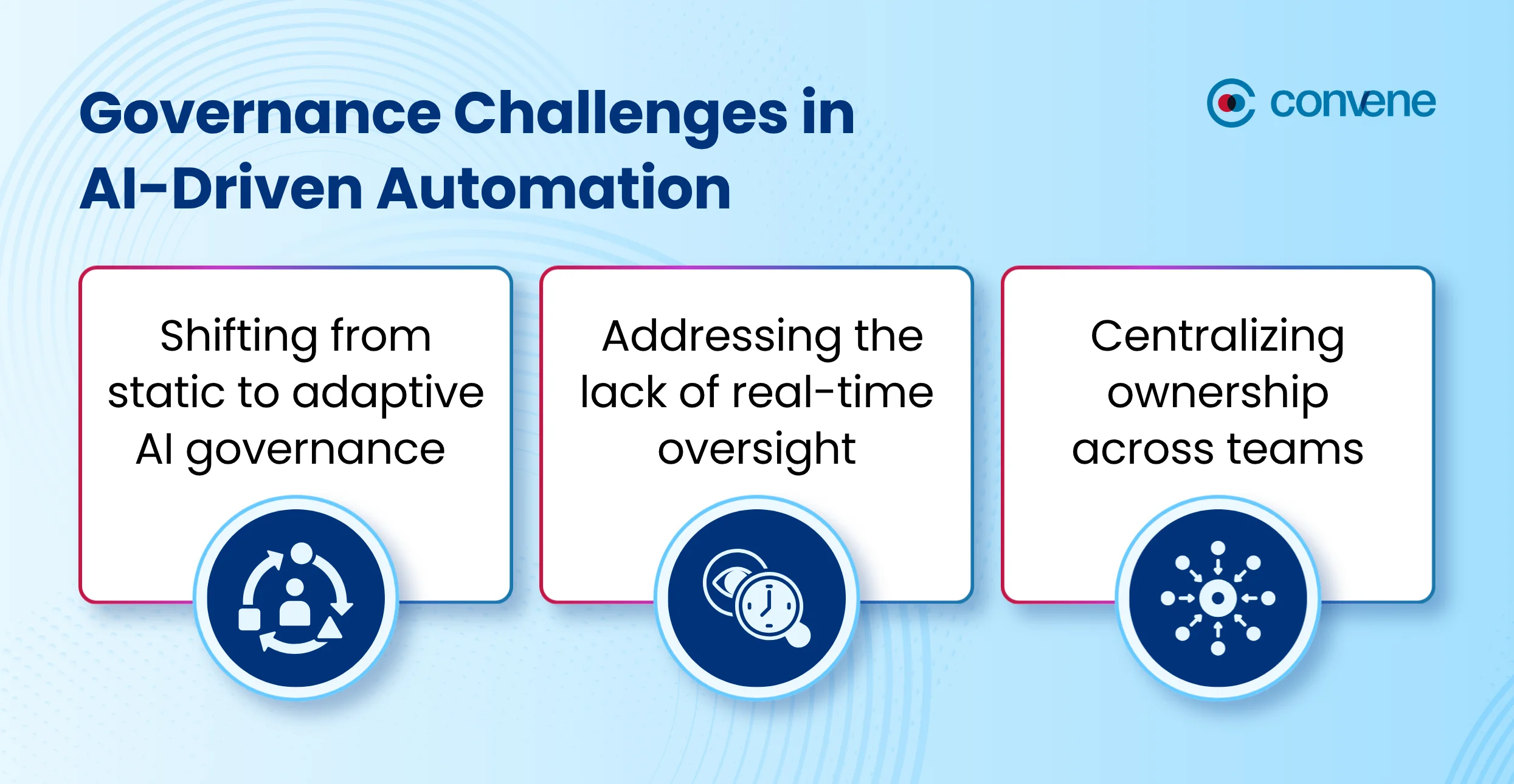
1. Shifting from static to adaptive AI governance
According to Info-Tech Research Group, many boards are struggling to govern AI autonomous systems because traditional AI governance was designed for static technologies.
The research further stated that one-dimensional policies, siloed compliance, and periodic reviews are no longer effective in managing modern AI automation. Transitioning to adaptive AI governance automation is challenging for most boards because it involves more than just updating policies. It requires reassessing current governance practices to identify AI maturity, redesigning control mechanisms, and strengthening the integration of tools for more adaptive processes.
2. Addressing the lack of real-time oversight
AI-driven automation widens the governance gap because it operates faster than human oversight can respond, making traditional AI governance methods insufficient. Adaptive governance approaches improve the ability to intervene in automated failures before they escalate into systemic problems.
Rather than relying on retrospective audit reports, boards must move upstream and establish robust monitoring systems to help them detect anomalies at par with the same speed and scale as AI automations.
3. Centralizing ownership across teams
No single stakeholder has full oversight and accountability because they typically involve multiple entities, including IT, legal, data science, and the board. In turn, siloed governance blurs the line of accountability among stakeholders, increasing the risk of compliance blind spots.
As the primary governing body, the board should take the lead by forming a dedicated committee to drive deployments and maintenance of AI systems. They are pivotal to centralizing AI governance by unifying approaches to policies and abolishing siloed governance.
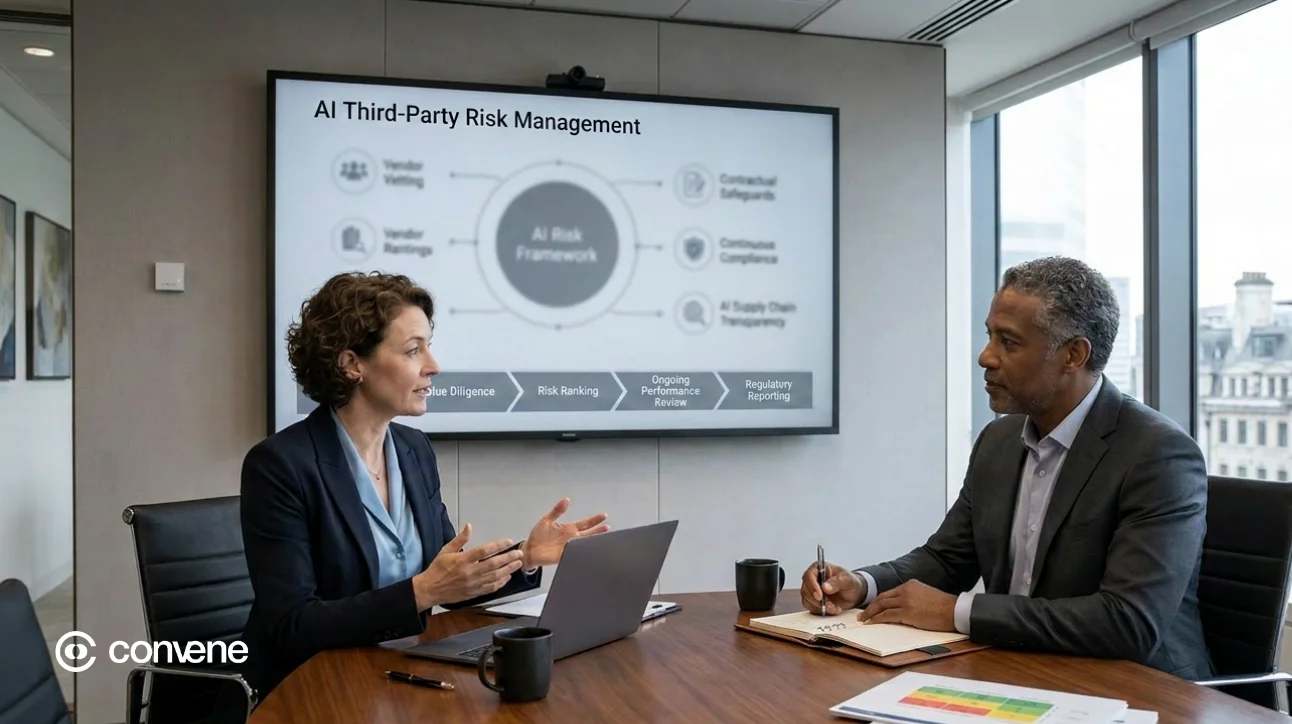
Is your organization ready to adopt AI responsibly? Here’s a self-assessment guide that evaluates four key governance areas for strengthening oversight and compliance.
Best Practices for Scalable and Effective AI Automation Governance
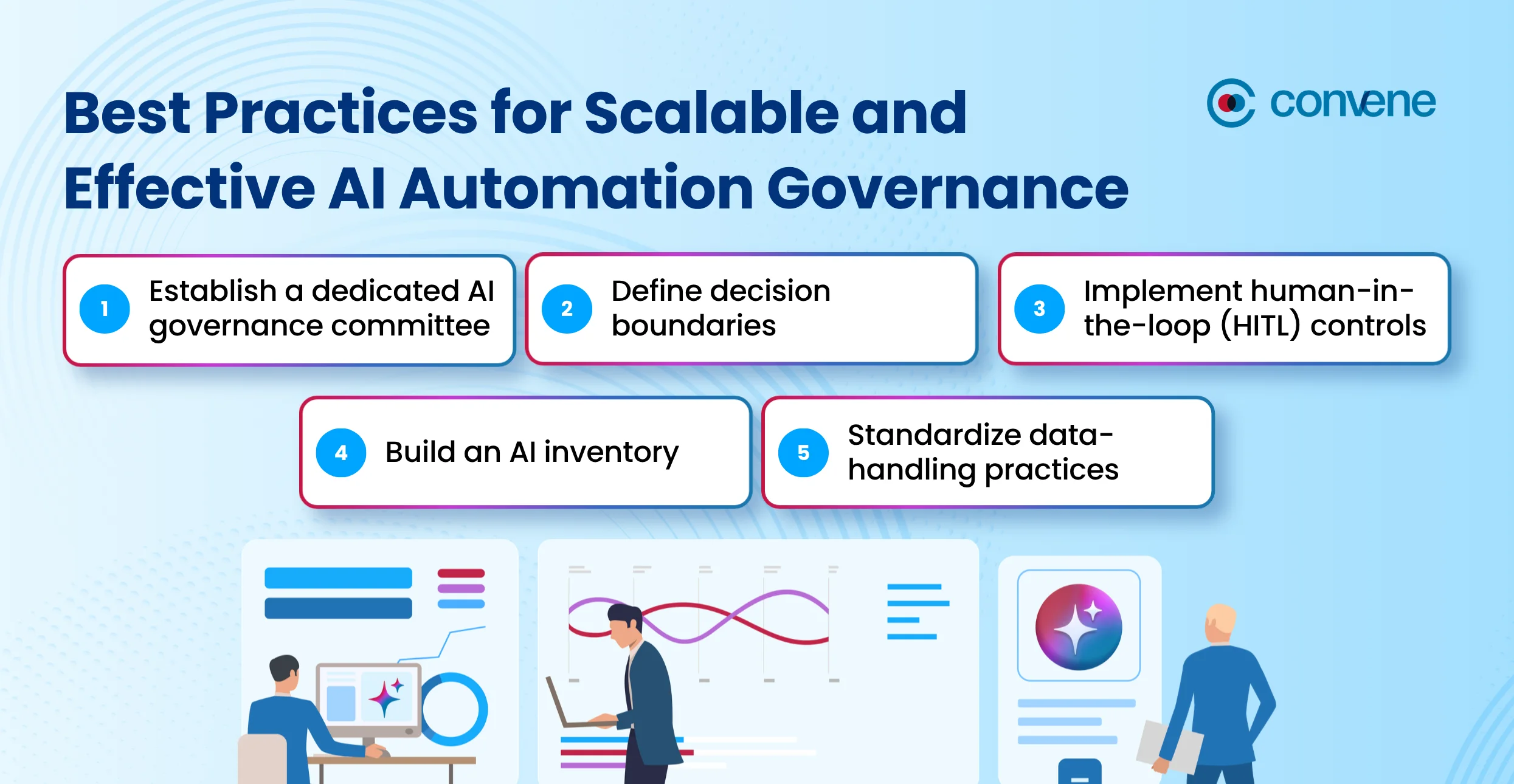
McKinsey found that high-performing companies treat AI as a catalyst that can transform their workflows. To fully harness the potential of AI automation, boards must prioritize the following best practices.
1. Establish a dedicated AI governance committee
Establishing an AI governance committee is an essential step in making AI a strategic priority. Under a dedicated team, it will be easier to centralize coordination for AI-associated concerns, enabling clearer decision-making, faster alignment, and more consistent oversight.
Ultimately, this move allows boards to scale AI oversight while maintaining trust and transparency across the organization.
2. Define decision boundaries
Disclose the limitations of the AI system — what actions can it take and what requires human intervention. Setting clear boundaries defines operating environments, preventing AI systems from performing actions outside the intended scope and making uncontrolled decisions.
Effective approaches to doing this are through API guardrails and robust workflow configuration.
3. Implement human-in-the-loop (HITL) controls
Establish checkpoints for human review throughout every workflow. Human judgment helps maintain fairness and compliance, especially for irreversible and high-stakes decisions. AI systems are only supposed to surface information or perform pre-defined tasks, but the final decisions should come from humans.
These checkpoints can include approving tasks, modifying outcome parameters, escalating to a higher authority for further review, or requesting more information from the system.
Additionally, these extra layers of review assure stakeholders that human oversight remains a priority despite increasing reliance on autonomous technologies.
4. Build an AI inventory
AI inventory, or AI register, is the process of building a detailed list of AI systems operating within the organization. This provides a comprehensive view of the AI landscape, enabling boards to pinpoint which departments use a specific system, its process, and purpose.
AI Inventory strengthens accountability across AI operators and prevents guesswork during malfunctions or breaches. Consequently, it enhances audit readiness and transparency for internal and external stakeholders.
5. Standardize data-handling practices
Standardizing AI datasets avoids amplification of biases and hallucinations. By defining consistent protocols for data collection and labeling, organizations can produce more accurate and reliable AI models.
At the board level, integrating an AI-powered board portal into the data handling network adds a new level of governance and oversight. The platform provides a secure, encrypted environment for exchanging and reviewing documents. It is built with access controls and audit trails to ensure robust protection of confidential information at all times.
How do governance platforms strengthen AI oversight and control?
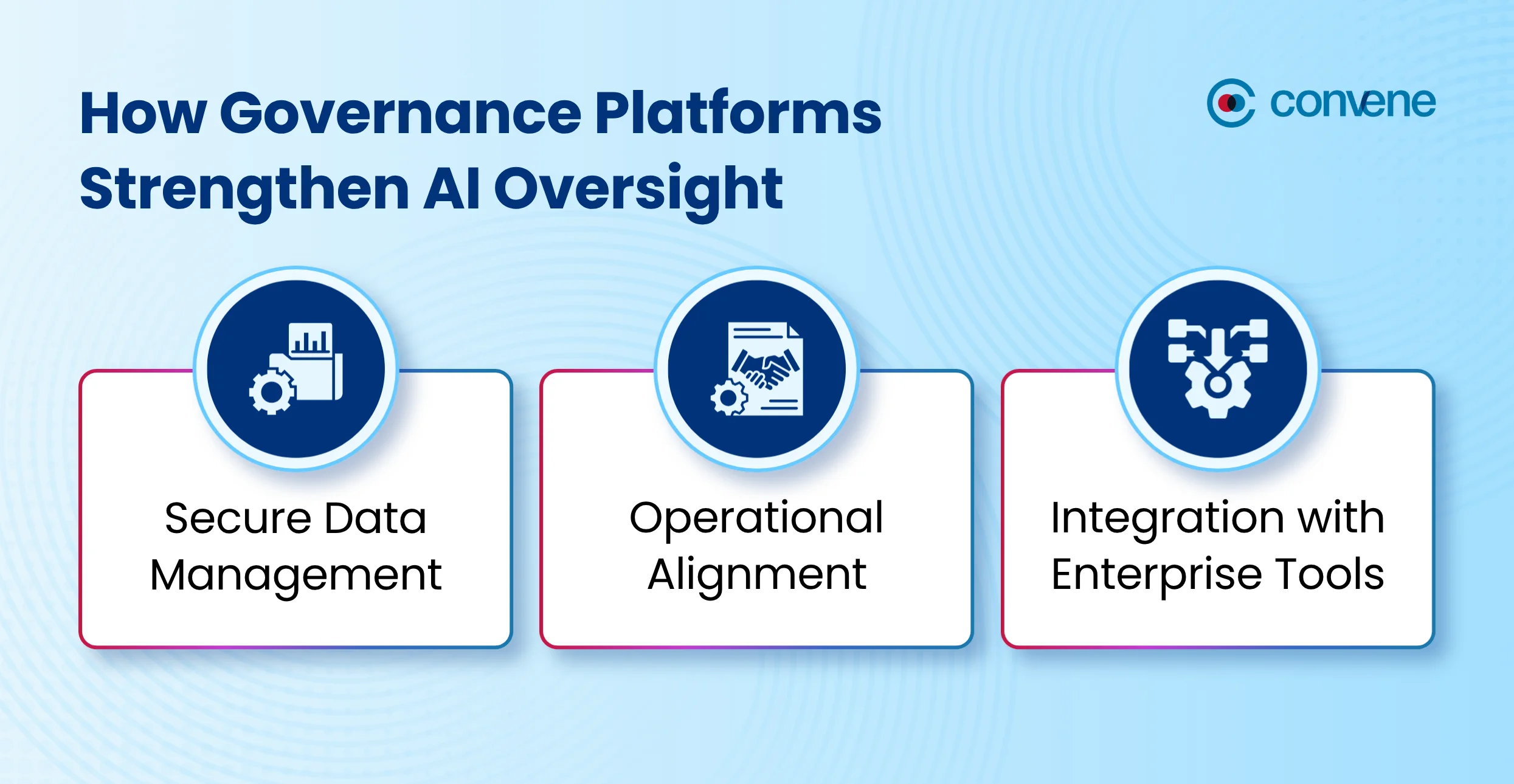
Governance platforms can help boards address the widening gap between AI automation and human oversight by providing real-time visibility into compliance activities, emerging risks, and data updates.
Through centralization of oversight, boards can eliminate fragmented governance processes and uncover the following benefits:
Secure Data Management
Governance platforms are highly secured digital environments where boards can track every action performed on data. They have automated monitoring features that boards can utilize to log every modification or new version, facilitating easier data lineage tracking.
For securing data access, governance platforms are also built with document encryption and role-based permission access for strengthening overall data hygiene.
Operational Alignment
The board can connect critical AI governance automation activities, such as strategic meetings, policy approvals, and compliance tracking, within a governance platform.
This technology offers real-time notifications on progress and violations, enhancing incident response, strategic alignment, and operational transparency. By centralizing governance oversight, the board can effectively shift from static to dynamic AI governance.
Integration with Enterprise Tools
Governance platforms are built on powerful data warehouses, such as Amazon Web Services (AWS), Azure, and Google Cloud, that meet global data privacy standards.
This helps streamline compliance with AI regulations and laws, which are also primarily anchored on existing data laws such as the General Data Protection Regulation (GDPR) and the Personal Information Protection and Electronic Documents Act (PIPEDA).
The Future of AI Automation Governance: 2026 and Beyond
With all that’s covered in this article, it’s clear that one-dimensional AI governance is no longer effective to support the scale and autonomy of AI systems.
For 2026 onwards, boards should continuously develop dynamic governance processes to keep pace with these emerging trends.
Rise of autonomous AI agents
Autonomous systems are moving beyond rule-based automation to independently execute multi-step workflows using model-based reasoning and decision logic. According to Amazon Web Services, autonomous AI agents are the next significant evolution in artificial intelligence. Gartner echoes this, projecting that approximately 15% of work decisions will be carried out by agentic AI by 2028.
Embedded real-time AI governance
Governance-by-design is emerging as the dominant approach for strengthening AI oversight. Rather than treating AI audits as periodic activities, this framework embeds monitoring and control mechanisms into data pipelines, model training, and AI environments to ensure continuous visibility and faster response.
From AI guidelines to enforcement
Governments are shifting their approach to AI governance from guidance to enforcement. Starting in 2026, the concern shouldn’t be whether organizations have an AI governance framework but if they have a strong structure to withstand increasing legal ramifications. This forces boards to view AI governance as a strategic risk that demands mature oversight structures to enhance compliance readiness and monitoring capabilities.
Frequently Asked Questions About AI Automation Governance
What industries need strong AI automation governance?
Any industry that uses AI to automate decisions and workflows should have strong AI automation governance. However, there are highly regulated industries where AI errors can lead to significant harm, including finance, healthcare, government, retail, logistics, and legal.
What are the skills needed for AI governance?
AI governance is multidisciplinary and requires technical, policy, and organizational skills. On the technical side, board members must understand how AI systems work, including machine learning basics, data handling, model testing, and AI risk management.
A strong background in policy development is also critical for upholding data protection laws and AI regulation standards. Lastly, communication and stakeholder engagement skills are essential for operationalizing the complex concepts of AI governance.
Operationalizing AI Governance at Board Level with Convene Board Portal
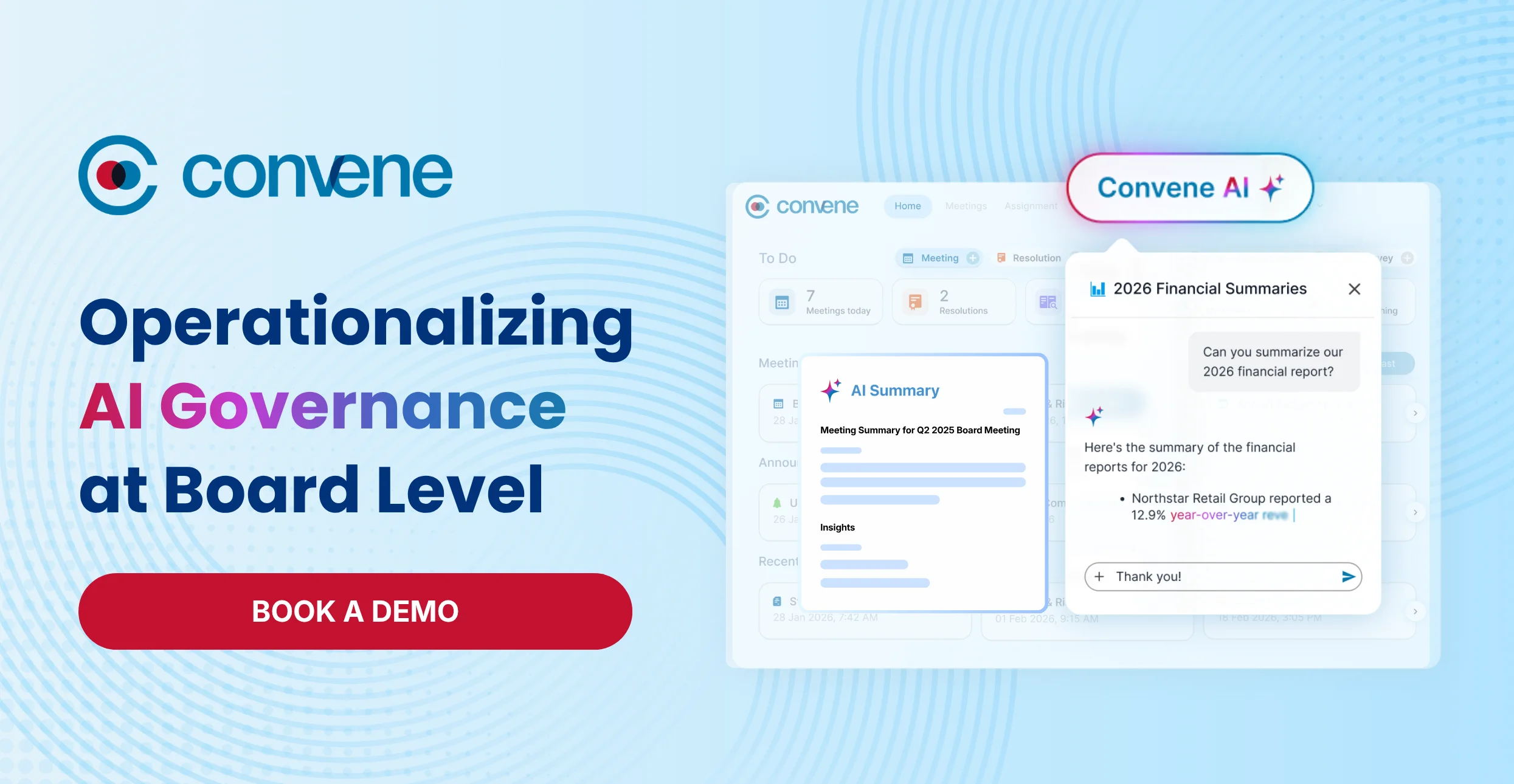
As AI becomes more autonomous, boards should have the same level of speed and adaptability in their governance practices, which they can begin by replacing fragmented governance with centralized oversight. However, this can’t be resolved just by implementing policies alone. Boards should leverage intelligent tools to support this transition.
Introducing Convene Board Portal, a leading board management software that offers AI-driven capabilities, seamless tool integrations, and enterprise-grade security.
Designed for modern boards, the platform empowers boards to proactively oversee day-to-day AI operations with features that streamline policy approvals, automation compliance tracking, and secure relevant AI-related datasets.
Boards can enhance their governance practices further using Convene AI — a suite of AI-driven capabilities such as automated minutes and an intelligent chatbot that help board members understand and act on strategic information.
The effectiveness of AI automation governance relies on the strength of governance structures, so boards must modernize their oversight to meet the complexity of evolving AI systems.
Book a Convene Board Portal demo today and discover its intelligent features.



Jean is a Content Marketing Specialist at Convene, with over four years of experience driving brand authority and influence growth through effective B2B content strategies. Eager to deliver impactful results, Jean is a data-driven marketer who combines creativity with analytics. In her downtime, Jean relaxes by watching documentaries and mystery thrillers.
- Connect:
-

-