

Key Takeaways:
- AI third-party risk management is the process of using artificial intelligence to automate vendor assessments and oversight, as well as monitor and mitigate risks posed by vendors or suppliers.
- Among the major risks of AI in TPRM are algorithmic bias and ethical exposure, black box models, regulatory non-compliance, and cybersecurity threats.
- Best practices in AI TPRM include revising the current risk management program, updating vendor inventory, checking data usage policies, automating the TPRM lifecycle, and conducting due diligence and monitoring.
- The six phases of the TPRM lifecycle are (1) planning and vendor identification, (2) due diligence and risk assessment, (3) contracting and risk mitigation, (4) onboarding, (5) ongoing monitoring, and (6) renewal, offboarding, or termination.
- Common AI tools for risk management include automated vendor monitoring platforms, predictive risk analytics dashboards, AI-driven threat detection systems, ML-based fraud detection solutions, and AI-enabled board management software.
In this modern age, organizations of all industries are being affected by the hasty surge of artificial intelligence (AI). Hailed as part of the new dawn of technology, AI is significantly transforming business operations in numerous ways, and third-party risk management (TPRM) is not an exception.
From automating processes to elevating risk assessment, AI is currently one of the most widely used technologies worldwide — promising nothing but modern capabilities. But how does it redefine the way businesses conduct third-party risk management? Can AI completely reinvent the TPRM space?
What is AI third-party risk management?
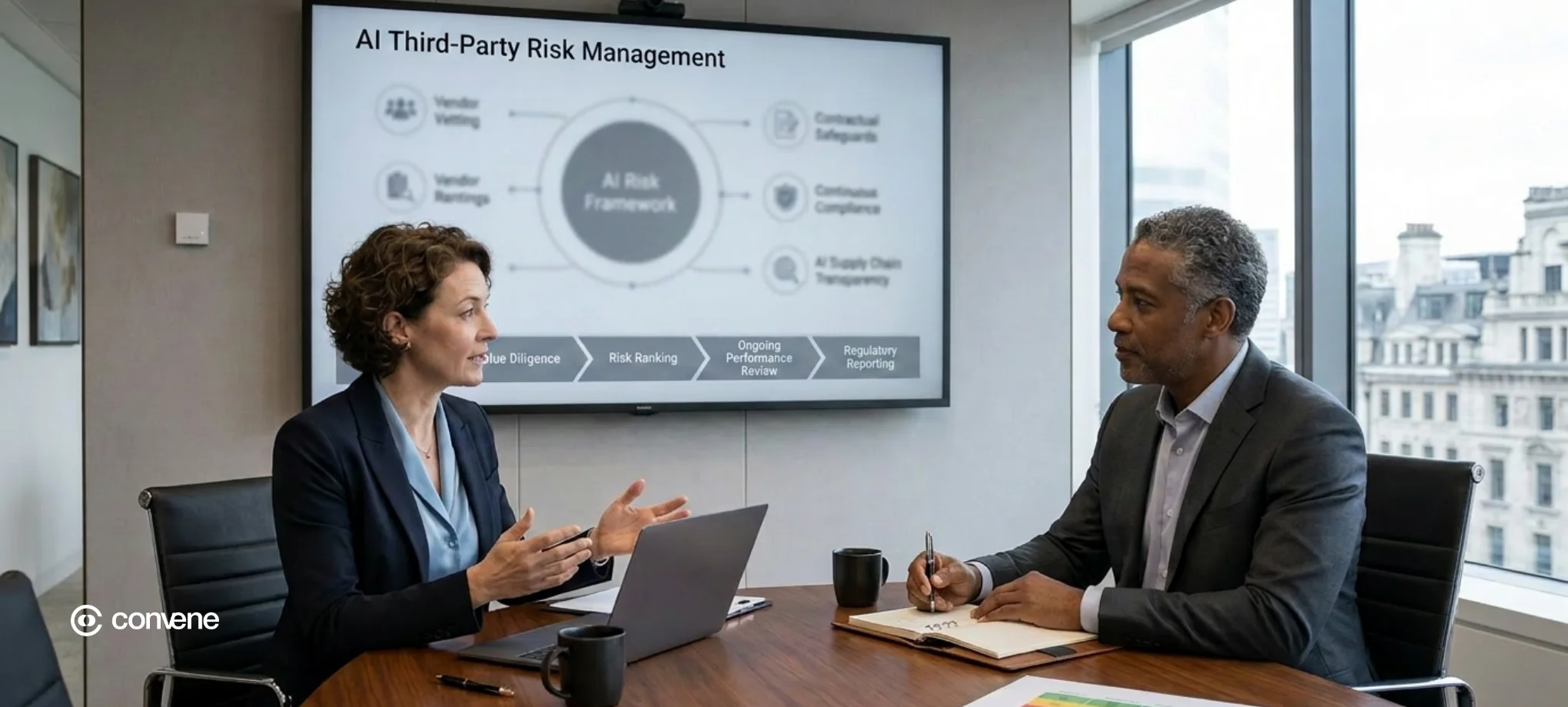
AI third-party risk management is the use of artificial intelligence to identify, evaluate, monitor, and mitigate threats linked to third-party vendors or outsourced service providers. Instead of relying on manual processes like traditional TPRM, this automates vendor oversight, provides predictive insights, and analyzes huge volumes of risk data.
Hence, detecting any potential threats before they even escalate.
Third-party risk management itself acts as a proactive discipline for mitigating risks inherent in outsourced tasks or third-party vendors. This strategic framework proves to be useful in preventing problems associated with third-party relationships, whether they be security breaches or operational disruptions.
Why is AI needed in third-party risk management?
AI third-party risk management aims to address the increasing demand for adaptive risk management and regulatory scrutiny while still embracing the potential of AI.
The third-party ecosystem is an emerging priority for modern businesses, yet many are still unprepared for the risks. In Panorays’ 2026 CISO Survey, 85% of organizations lack full visibility into their entire supply chain, including third-party vendors. Therefore, this area remains largely unmonitored despite the increasing number of risks.
With artificial intelligence integrated in TPRM, periodic vendor assessments are transitioned from manual to automated oversight using AI/ML to detect risks. This upgrade streamlines not just vendor contract analysis but also provides 360-degree risk profiles and predictive insights to mitigate threats from vendors or AI tools for risk management. Some examples of AI integration in TPRM are automated due diligence systems, AI-powered vendor management systems, threat intelligence platforms (TIPs), and NLP-based contract analysis tools.
How is AI changing third-party risk management?
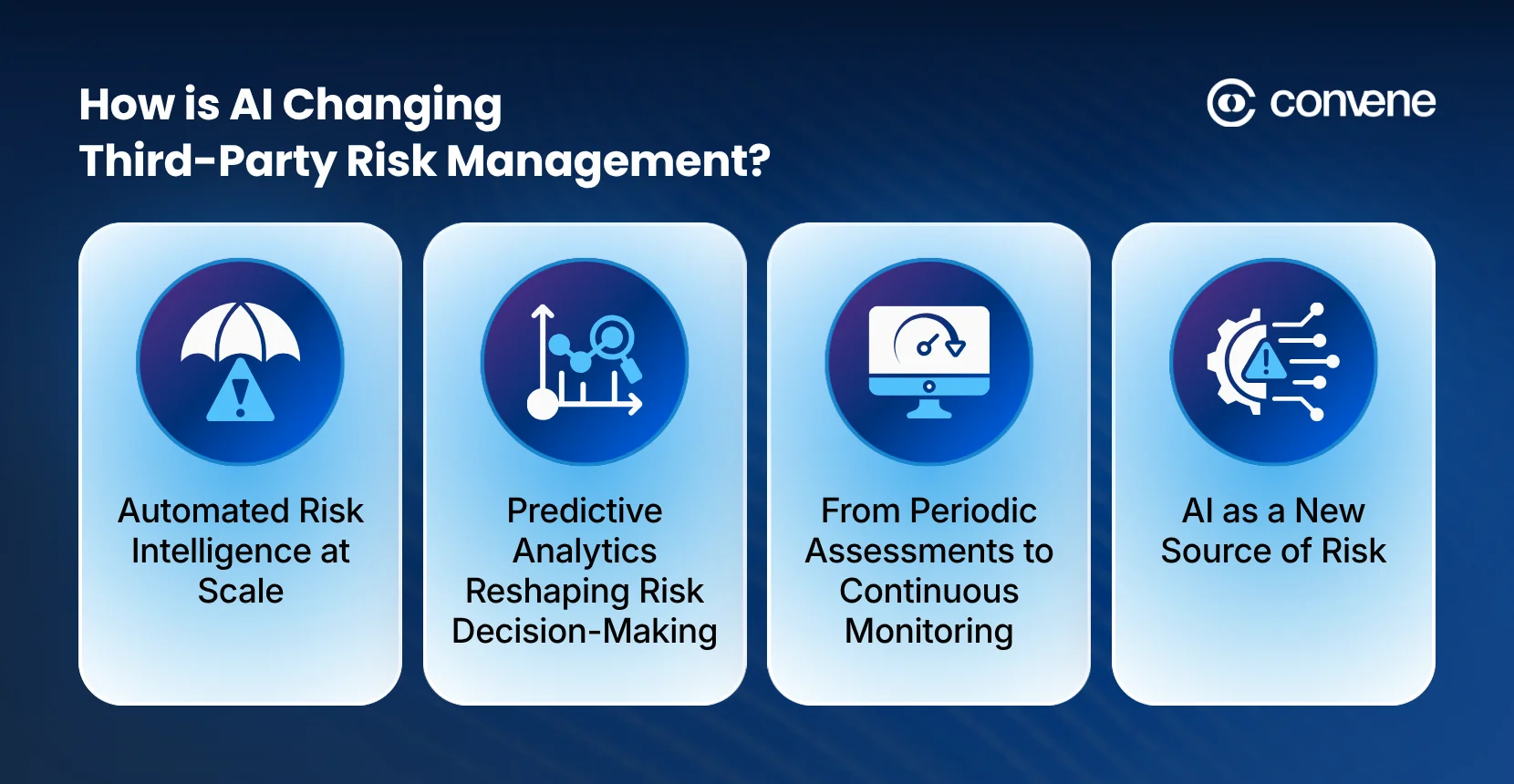
With the introduction of AI into third-party risk management, organizations can now process bigger volumes of vendor data, detect threats in real time, and most importantly, shift from reactive compliance to predictive risk management.
In KPMG’s 2026 Global TPRM Survey, more than 50% of organizations are exploring AI, and 22% are finding it very effective for their third-party risk management programs. Below are some ways AI is changing the third-party risk management space.
Automated Risk Intelligence at Scale
With artificial intelligence, the entire lifecycle of vendor assessments, from onboarding questionnaires to risk scoring, can be well automated. This automation, however, doesn’t just focus on efficiency but also improves coverage and consistency.
In general, AI systems aim to standardize logic across vendors to reduce human bias and error. This also allows entities to conveniently scale risk oversight without increasing resources, which not all businesses can always afford.
Predictive Analytics Reshaping Risk Decision-Making
One thing many organizations struggle with is moving their TPRM from hindsight to foresight — and that’s something AI is designed to do. Predictive analytics models can analyze historical and real-time vendor data to anticipate any potential failures, cyber incidents, or compliance breaches.
AI, for instance, can correlate weak security signals with external threat intelligence. Therefore, allowing the entity to forecast the likelihood of a threat and prioritize high-risk vendors. In short, this helps organizations to be proactive instead of only reacting after incidents happen.
From Periodic Assessments to Continuous Monitoring
Traditionally, vendor assessments are only done annually or quarterly, as they require significant time just to gather data. AI is created to dismantle such issues, enabling organizations to implement continuous monitoring and acquire real-time data.
This ability of AI is particularly useful for organizations operating in an industry where supply chain disruptions or cyber incidents evolve in hours, not months. Most models can also flag anomalies (e.g., small changes in vendor behavior) so risk teams can intervene before disruptions even occur.
AI as a New Source of Risk
AI does not always bring good news, it also comes with risks that sometimes can compromise third-party risk programs.
A 2025 report by PwC suggests that traditional tools for third-party management are not designed to address risks associated with AI, such as bias mitigation, data lineage controls, or questions about model training. In response, organizations are now embedding AI-specific controls and demanding full disclosure from vendors to maintain governance and regulatory compliance.
Major Risks of AI in Third-Party Ecosystems
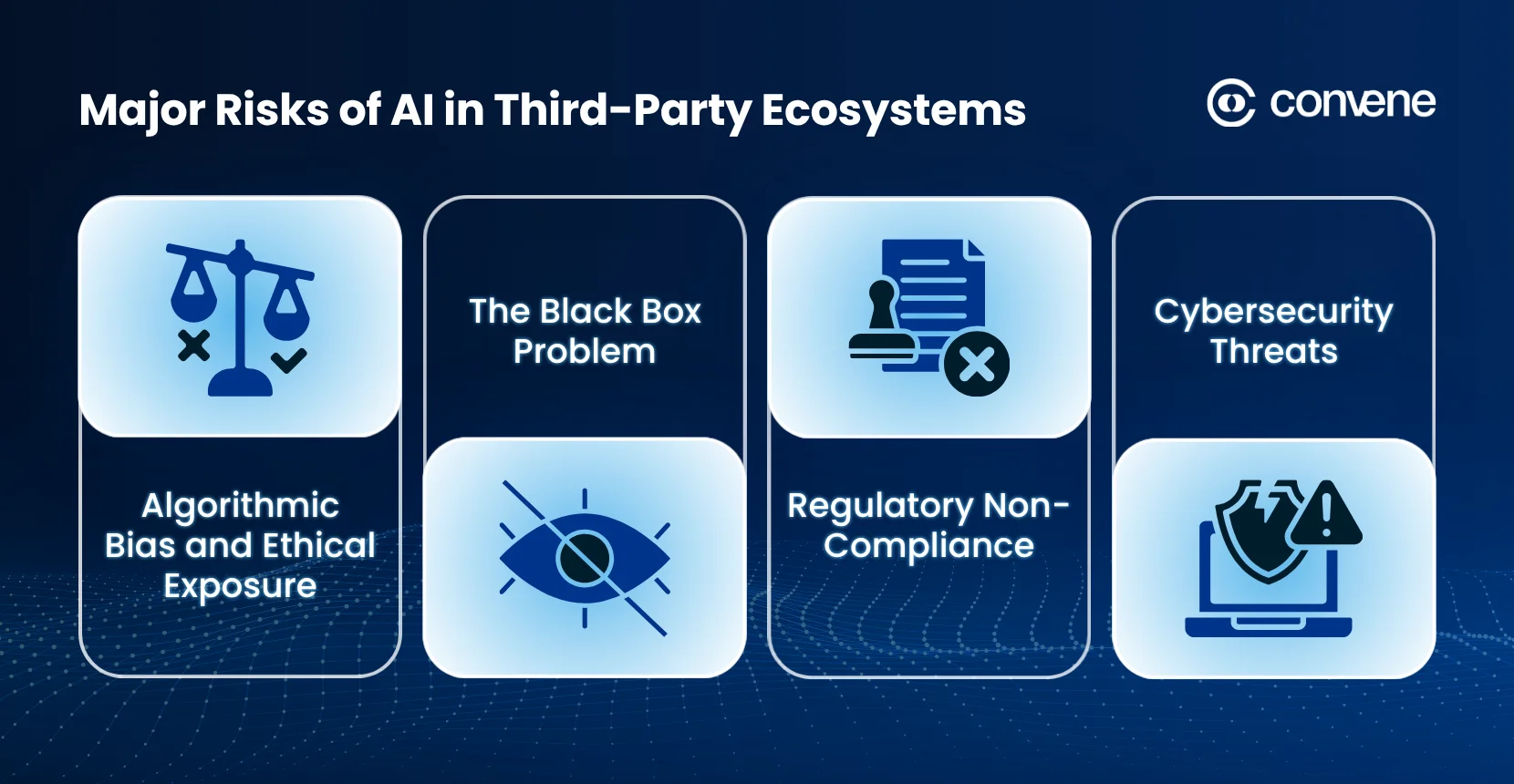
Speaking of risks, AI in the TPRM space does come with some threats that organizations should take note of. In a 2025 survey by EY, 45% of organizations have updated their strategic plans to incorporate AI, but only 10% are fully prepared for AI system audits. The study also found that third-party risks are perceived as less critical, suggesting organizations still underestimate their significance.
Listed here are the top risks of AI in third-party ecosystems.
1. Algorithmic Bias and Ethical Exposure
In some cases, AI systems are trained on incomplete or unrepresentative datasets that result in them embedding bias at scale. Such risk is also closely linked to limited visibility on how a vendor designs, trains, or validates their AI models.
Up to this day, bias remains one of the most difficult-to-detect risks in AI. A 2025 study by the Pew Research Center found growing concerns (55%) about AI bias, misinformation, and data misuse. These potential biases are typically related to race, ethnicity, and gender (e.g., hiring algorithms).
In the TPRM setting, this AI bias can affect how entities assess and manage external vendors. For one, vendors may be inaccurately classified as low- or high-risk if an AI model in use is trained on biased datasets. Therefore, leading to unfair vendor evaluations, compliance issues, and even weakened oversight.
2. The Black Box Problem
Another risk of using AI in the TPRM space is that many models, especially those created from deep learning, operate as black boxes. These black box models lack the transparency as to how they arrive at their conclusions, making them susceptible to bias as well. In some cases, AI systems become black boxes as a by-product of their training, while others are made into black boxes on purpose.
According to the Stanford Institute for Human-Centered Artificial Intelligence (HAI)’s 2025 AI Index report, explainability (40%) is among the AI-related risks that organizations consider relevant and actively working to mitigate. The lack of explainability that comes with black boxes compromises auditability and governance, particularly in industries where vendors must justify their risk decisions.
3. Regulatory Non-Compliance
In EY’s Responsible AI (RAI) Pulse survey, 57% of organizations face non-compliance with AI regulations, which is among the most common AI risks. That said, organizations and vendors alike must meet standards such as ISO/IEC 42001 and regulations like the EU AI Act, the Digital Operational Resilience Act (DORA), as well as evolving U.S. AI laws.
Apart from those, other regulations such as data protection laws and AI governance rules require entities to understand how a model processes, stores, and transfers data. This, however, becomes difficult when there’s unclear accountability across the third-party risk management space.
Additionally, having inconsistent AI security policies and risk management procedures can often lead to more complicated audits. So, when there’s third-party misuse of AI, there could also be negative compliance or legal repercussions in the end.
4. Cybersecurity Threats
Traditional TPRM frameworks are not designed to address the fast-evolving cyber threat landscape, which is now even more expanded through AI. Among the threat vectors today are data poisoning (or manipulating training data), model theft, and prompt injection. Such threats are all likely to compromise AI-driven risk assessments, or worse, even expose confidential vendor data.
In IBM’s X-Force Threat Intelligence Index 2026 Report, threat actors are found to have been applying generative AI to scale phishing operations, expand malicious code development, and upgrade social engineering. Other threats include AI-assisted impersonation and language manipulation.
Phases of the Third-Party Risk Management Lifecycle
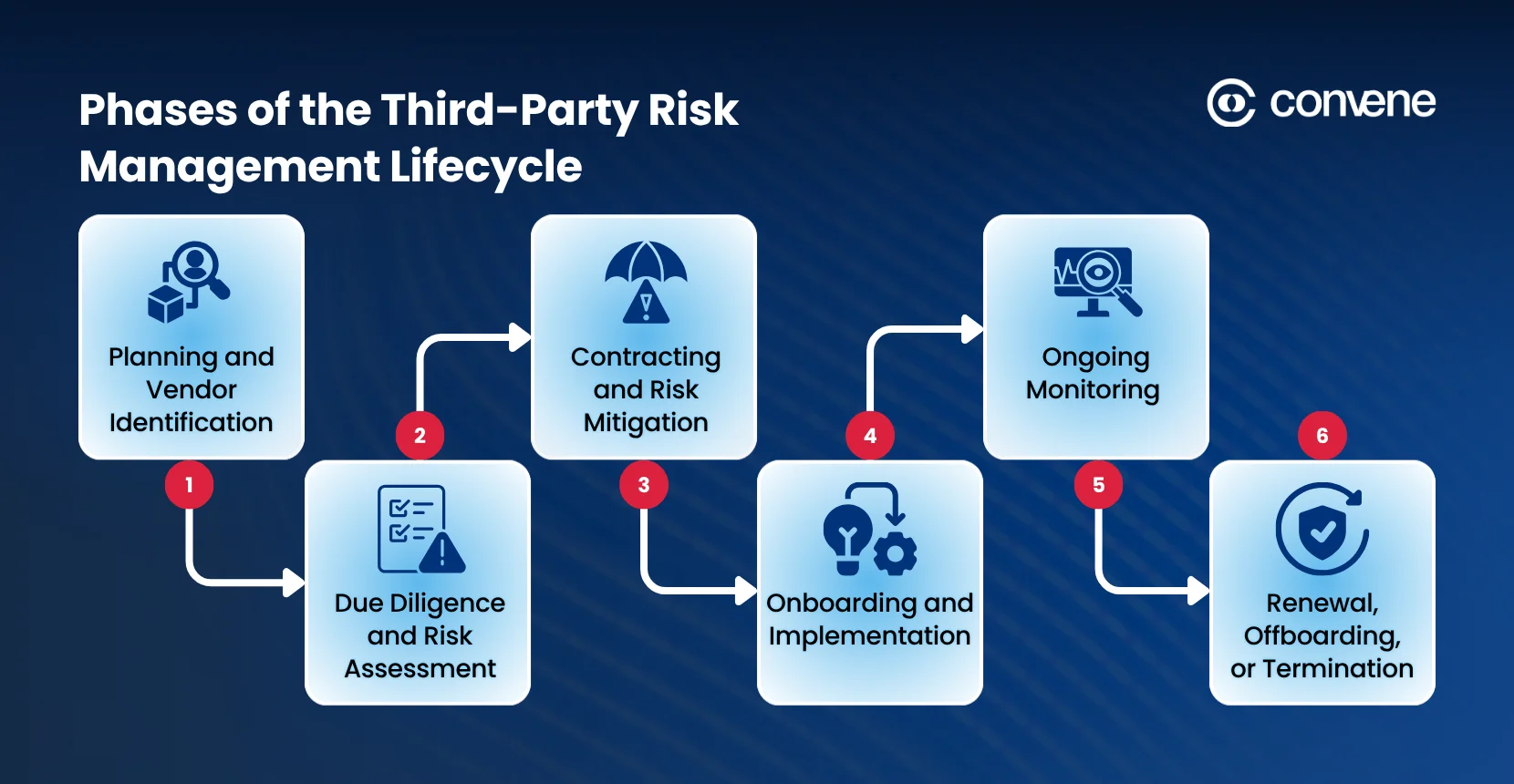
Having a structured TPRM lifecycle can help your organization identify, assess, and monitor threats throughout the vendor relationship. Here’s the ideal TPRM lifecycle in six phases.
1. Planning and Vendor Identification
The first phase requires your organization to identify its third-party service needs while selecting vendors who can meet them. It is recommended to conduct initial risk scoping based on the vendor’s criticality, type of data access, regulatory exposure, and AI usage (if applicable) to determine the required level of due diligence.
2. Due Diligence and Risk Assessment
In this phase, conduct a thorough evaluation of your potential vendors, including financial stability, security posture, compliance history, operational resilience, and AI governance practices. You can utilize risk questionnaires, control assessments, and background checks to identify the inherent risk level associated prior to onboarding a vendor. In terms of AI, look into model transparency, training data sources, and bias management controls.
3. Contracting and Risk Mitigation
Once a vendor has been selected, create formal contracts to provide for risk mitigation controls that define security requirements, service level agreements (SLA), data protection requirements, rights to audit, and incident notification terms so as to hold the vendor accountable. As for AI-enabled vendors, make sure to include clauses for AI accountability, data ownership, and model changes.
4. Onboarding and Implementation
During the onboarding, vendors must be integrated into your organization’s systems and processes under security and compliance controls. Successful execution of the onboarding phase will operationalize the various contractual obligations (e.g., provision of access, control validation, baseline security configurations). For AI systems, validate implementation controls and ensure usage boundaries align with your internal governance requirements.
5. Ongoing Monitoring
Following the onboarding, vendors should be continuously monitored to ensure performance, compliance, and emerging risks are tracked. Monitoring also includes periodic reviews, key risk indicators (KRIs), cybersecurity monitoring, AI model performance review, and regulatory compliance tracking to detect changes in vendor risk profiles.
6. Renewal, Offboarding, or Termination
In the final phase, reassess vendor relationships to decide whether you want to review, modify, or terminate their contracts. Offboarding includes limiting vendor access to systems, ensuring they no longer have access to or have destroyed any company data, and documenting compliance to maintain audit readiness and reduce residual risk. Moreover, the vendor should also confirm deletion or retention handling of AI training data and generated outputs.
Best Practices for AI Third-Party Risk Management
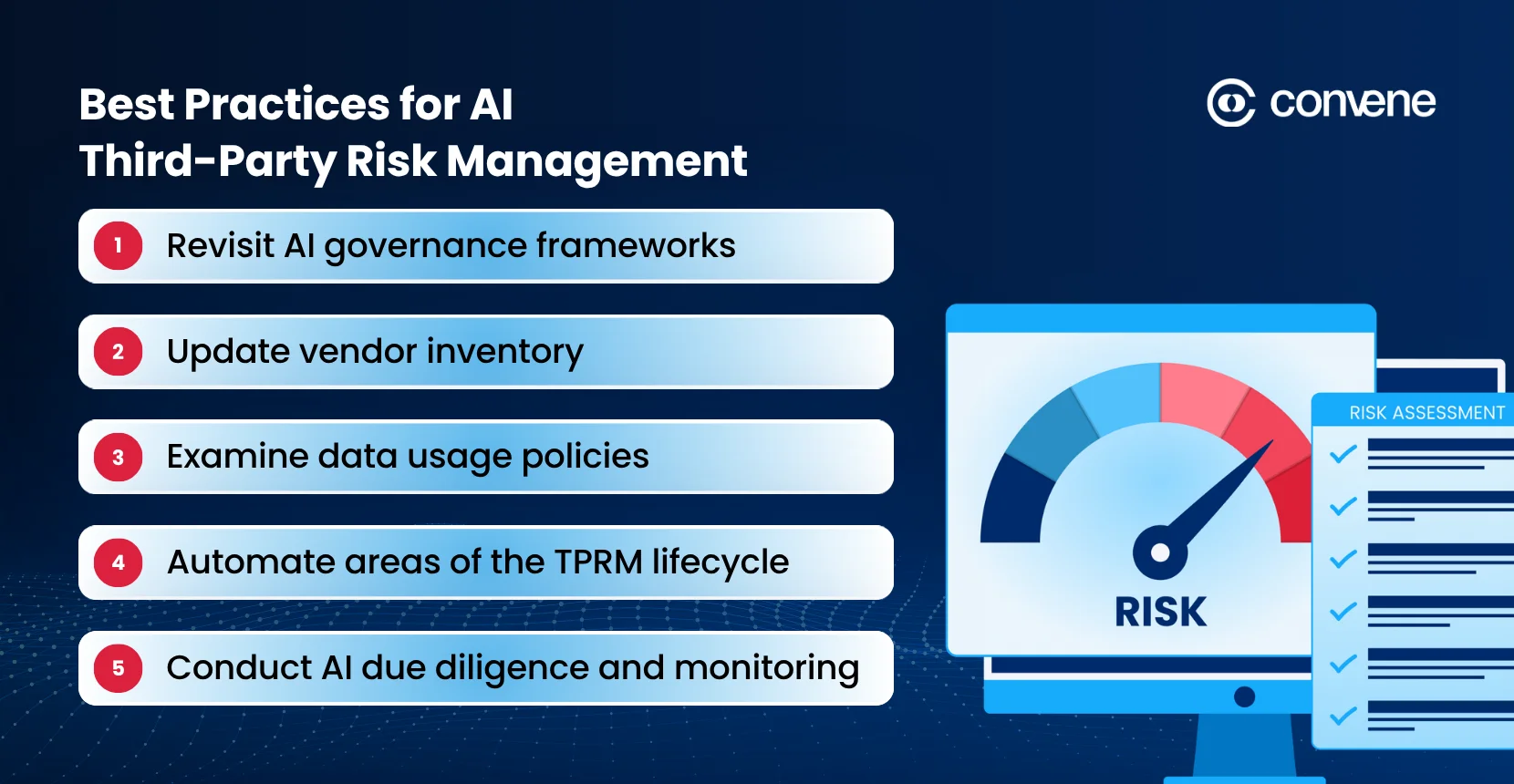
With AI now on the scene, managing third-party risks has never been more challenging. To help organizations establish an effective TPRM program, here are the best practices to follow:
1. Revisit AI governance frameworks
It is always better to start reassessing your existing AI governance frameworks and current AI governance maturity, especially if you’re doing periodic or annual reviews. The problem is, many organizations still operate with fragmented governance models, limiting them to respond to new risks.
Organizations must align governance approaches with recognized frameworks such as the NIST AI Risk Management Framework (AI RMF), ISO/IEC 42001, and the OECD AI Principles. Doing so can strengthen risk oversight, transparency, and accountability.
2. Update vendor inventory
It’s not enough that your vendor inventory is centralized — it should also be dynamic and risk-prioritized. As AI becomes more advanced, visibility in your third-party relationships gets more critical. It is recommended to regularly update vendor assessments, conduct continuous due diligence, and even revise agreements with current vendors to reflect evolving AI threats and security expectations.
Additionally, it is also beneficial to utilize AI-enabled TPRM systems that offer continuous discovery and mapping of vendor ecosystems. This is particularly useful for looking into multiple vendors using the same cloud infrastructure provider.
3. Examine data usage policies
One important pillar of TPRM is data governance. This is also why it’s crucial to carefully check how third parties collect, store, and use data. Make sure the vendors you work with comply with standards around data privacy, from data residency to cross-border transfer. It is also advised for organizations to request contractual clauses that explicitly prohibit vendors from using data for unauthorized model training. Besides training restrictions, create policies that define data ownership and usage rights.
4. Automate areas of the TPRM lifecycle
Keeping your TPRM processes manual typically equates to limited scale and accuracy. Automation, particularly AI-driven, allows organizations to streamline areas such as vendor onboarding, risk scoring, and continuous monitoring. Doing so can also reduce assessment time by identifying control gaps, flagging inconsistencies, and even aggregating vendor scores.
5. Conduct AI due diligence and monitoring
Utilizing traditional due diligence frameworks isn’t enough to accurately assess AI-enabled vendors. It is helpful to expand your organization’s evaluation criteria to include AI governance, bias mitigation, and training data transparency. At the same time, vendors should provide model documentation, audit trails, and validation reports as part of the due diligence process.
Incorporating real-time monitoring mechanisms into your TPRM process helps you detect changes in vendor risk posture and performance anomalies. For instance, if you see a sudden decline in a vendor’s cybersecurity rating or changes in AI outputs, it’s a sign to trigger automated reassessment workflows.
Frequently Asked Questions About AI Third Party Risk Management
How should organizations tier AI third-party risks?
Organizations are recommended to utilize a risk-based tiering model, wherein traditional vendor criteria (e.g., data sensitivity, system access) are combined with AI-specific factors, like model impact, autonomy level, and use of regulated/personal data.
High-risk tiers usually involve vendors integrating AI in decision-making contexts like credit scoring and fraud detection. Lower tiers, on the other hand, may include AI used for internal efficiency with minimal data exposure.
Which department owns third-party risk management?
There is no single owner of TPRM, which is typically a cross-functional responsibility. In most cases, it is commonly led by risk management, compliance, or procurement functions in an organization. These are teams with strong involvement in IT, cybersecurity, legal, and data governance.
What are some of the AI tools for risk management?
Organizations today use a wide range of AI-powered tools to improve their risk management processes. These include automated vendor monitoring platforms, predictive risk analytics dashboards, AI-driven threat detection systems, ML-based fraud detection solutions, and AI-enabled board management software.
Transform Your Third-Party Risk Management Process with Convene
Establishing an effective TPRM framework isn’t just about managing vendors. A future-forward organization should know risks are no longer confined to vendors but also to data usage practices, changing regulatory requirements, and opaque algorithms.
Designed as a single source of truth for governance, Convene Board Portal ensures all third-party risk insights, from vendor-related documents to risk reports, are centralized and accessible. With Convene, organizations can:
- Create risk-focused board discussions: Structuring your meetings around third-party risks is now easier through Convene’s Agenda Builder. Make sure vendor reviews, mitigation strategies, and compliance updates are addressed at the board level.
- Centralize vendor risk documentation: Securely store and manage due diligence reports, contracts, and audit records with Convene’s Document Library — an easy-to-access repository for all your third-party risk data.
- Expedite decisions with full accountability: Approve vendor engagements, risk actions, or policy updates with a complete audit trail using Convene’s Voting and Resolutions features, and maintain transparency all throughout.
To further help, Convene AI is now accessible for organizations as support for third-party risk management. Powered by AWS Bedrock, all vendor data and TPRM materials are kept in a secure environment.
Request a demo now to learn more about Convene Board Portal, its responsible AI feature, and enterprise-grade security.



Jielynne is a Content Marketing Writer at Convene. With over six years of professional writing experience, she has worked with several SEO and digital marketing agencies, both local and international. She strives in crafting clear marketing copies and creative content for various platforms of Convene, such as the website and social media. Jielynne displays a decided lack of knowledge about football and calculus, but proudly aces in literary arts and corporate governance.
- Connect:
-

-