


Key Takeaways:
- A plurality vote is a system that allows a candidate or option with the most votes to win, even without majority support, making it a fast and straightforward decision-making method.
- Boards commonly use plurality voting to elect directors or decide among multiple options when efficiency and time are critical, since it does not require a runoff or another round of voting.
- While simple and cost-effective, plurality voting can result in discrepancies where outcomes do not reflect the preferences of most voters.
- Convene board portal supports secure and transparent plurality voting through electronic voting, clear vote tracking, and reliable audit trails.
Voting is one of the most effective ways for boards and communities to turn different opinions into clear, actionable decisions. Whether in national elections, a member-based organization, or on a corporate board, voting helps guide your group toward a shared outcome. Among the various voting methods, plurality voting is one of the most commonly used.
Boards use this type of voting system to elect directors, approve motions, or decide among multiple options. That is why, for board members, it is especially crucial to understand how vital plurality voting is for effective governance.
In this guide, you will learn what plurality voting is, how it compares to majority voting, when to use it, and the steps you can follow to conduct a plurality vote.
What is plurality voting?
Often referred to as first-past-the-post or winner-take-all, plurality voting is a system in which the option or candidate with the plurality of votes wins, even if that total does not exceed 50% of the votes cast. In other words, a majority is not required; the winner simply needs more votes than any other option.
So, how does it work? One plurality voting example is a board election where three candidates received the following votes:
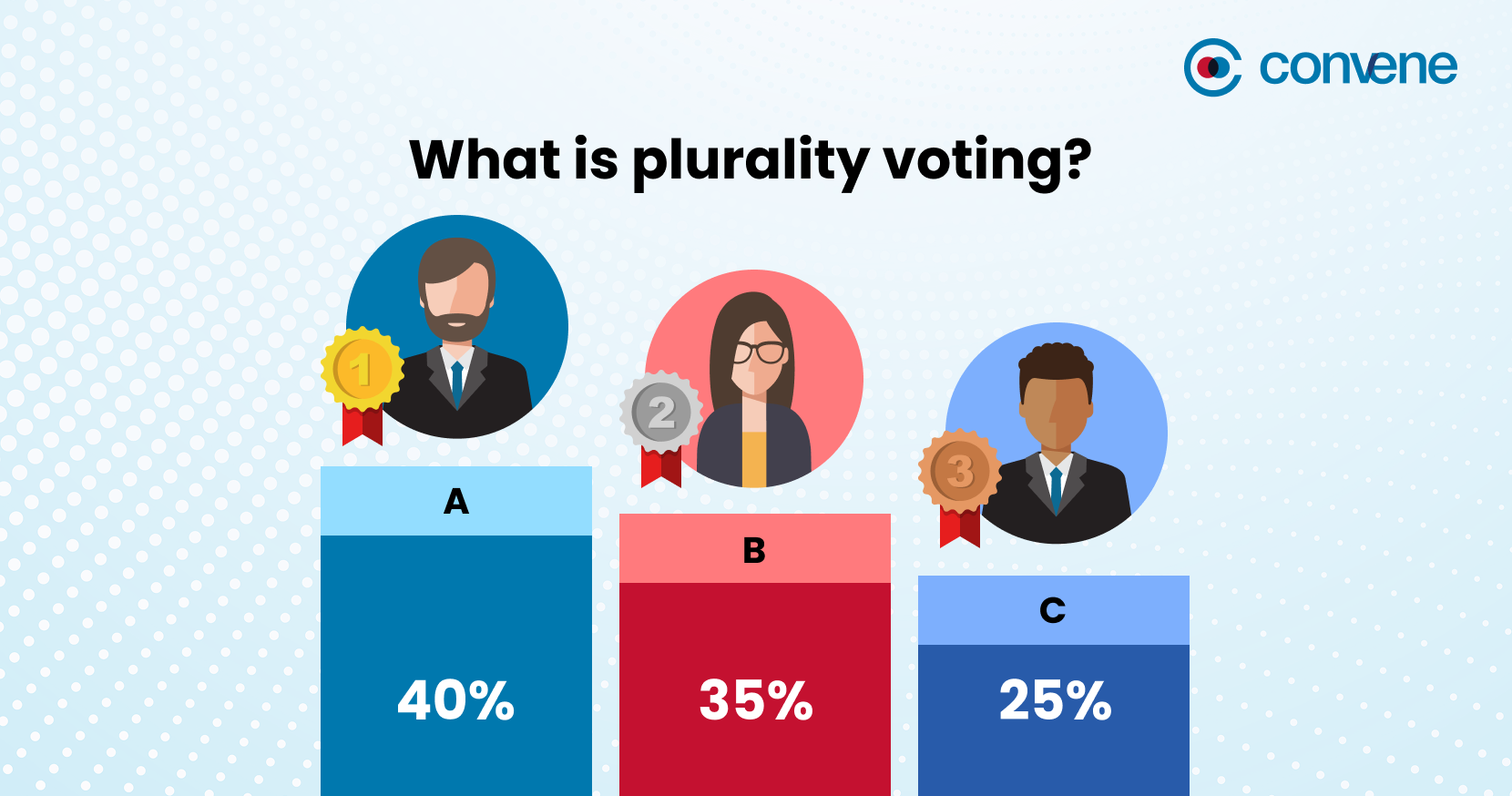
In this case, Candidate A wins with 40%, even though they did not receive support from more than half of the voters. Plurality voting is popular in many organizations and boards because it is practical and easy to use. Its straightforward structure makes it a strong choice when quick and clear decisions are needed. This voting method is also widely used in public elections. Countries like Canada, Great Britain, India, and the United States use it for national legislative voting.
Plurality Vote vs. Majority Vote vs. Single Runoff Vote
All three voting systems help boards and organizations come up with a unanimous decision. The main difference is how much support the winner needs to have.
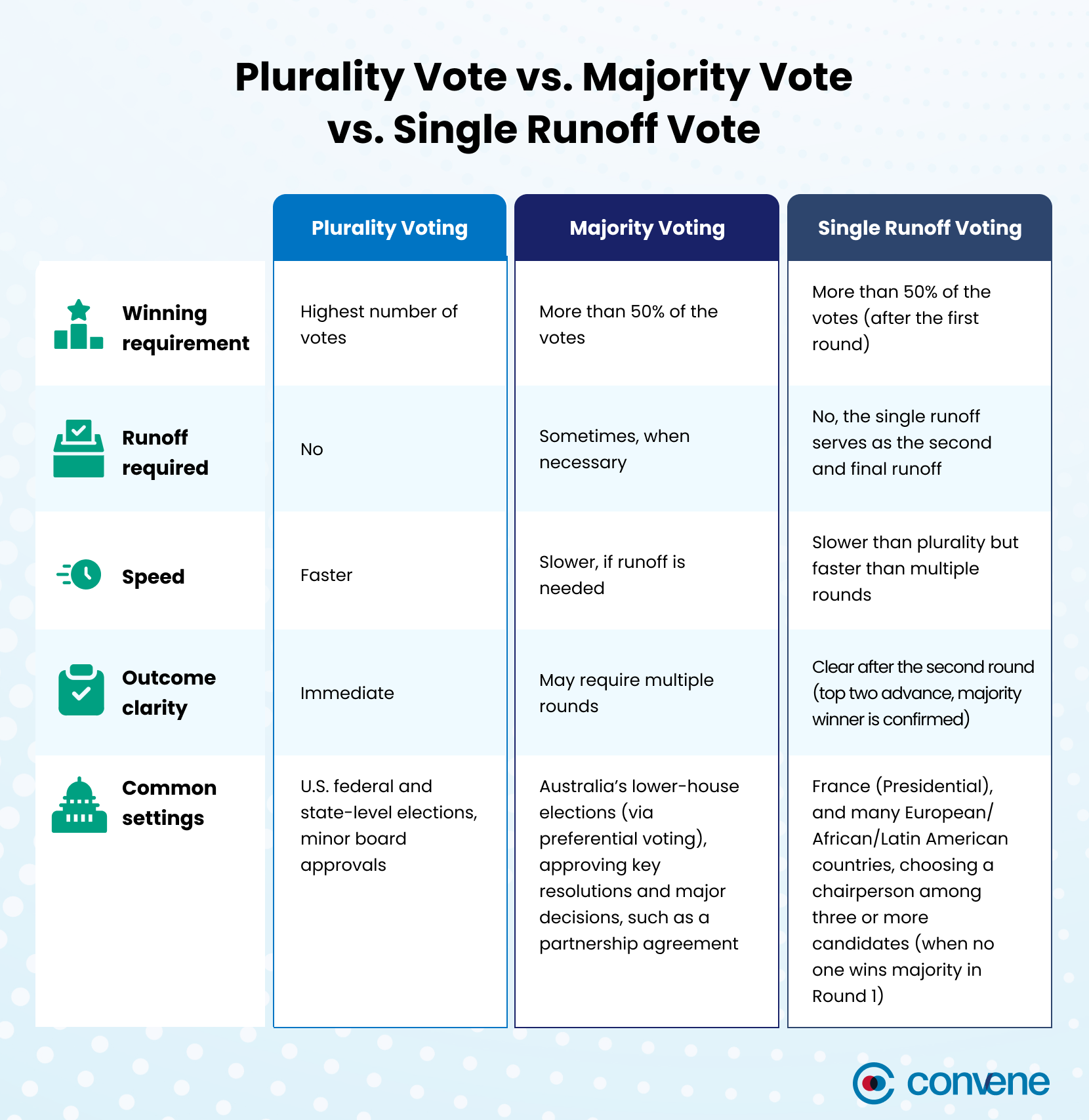
In a plurality vote, as aforementioned, the option or candidate with the most votes wins, even if that is less than half of all votes cast. In contrast, a majority vote requires the winning option to secure more than 50% of the votes. If no option reaches that level, your group may need to hold additional voting rounds or a runoff. This is where single runoff voting becomes useful. Instead of repeating multiple voting rounds, a second and final round is held between the top two choices to ensure the winner earns majority support.
Here is a three-way comparison to help you better understand the differences between plurality, majority, and single runoff voting:
With these facts in mind, you might wonder which voting method your board should use. Well, there is no one-size-fits-all answer. The best method depends on your board’s goals and structure.
But, when is plurality voting best used? Here is another comparison table to help you decide:
| When to Opt for Plurality Voting | When to Go for Majority Voting | When to Choose Single Runoff Voting |
|---|---|---|
|
|
|
Key Advantages of Plurality Voting
Beyond its practicality, plurality voting offers several key benefits that make it a popular choice for many organizations:
Simplicity
Plurality voting is easy for both voters and administrators to understand. Each voter selects one option, and the option with the most votes wins. This clear and direct process helps reduce confusion, shortens explanations, and lowers the risk of mistakes, especially in large groups or repeated elections.
Speed and Efficiency
Because plurality voting does not require a second round or runoff, decisions can be made as soon as the votes are counted. This allows boards and committees to move forward quickly, which is especially helpful for time-sensitive resolutions or meetings with tight schedules, such as annual board elections or policy votes.

Cost-Effectiveness
Plurality voting usually requires fewer resources because there are fewer voting rounds and less administrative work. This means your organization can minimize setup, monitoring, and follow-up, whether voting occurs in person or through a digital platform.
Familiarity and Accessibility
Many people in the United States are already familiar with plurality voting because it has been used in public elections for many years. This familiarity can help increase voter confidence and participation. It also reduces the need for extra training or guidance, especially for new or occasional voters.
Limitations to Consider with Plurality Voting
Despite these strengths, some limitations may also arise when implementing plurality voting. When there are many candidates or options, the winner may only have support from a minority of voters. As choices increase, results can reflect divided preferences instead of clear group agreement. This can also lead to strategic voting, where people choose a candidate they think can win instead of the one they actually want to win.
These trade-offs are easier to see when you compare plurality voting to majority voting systems, which aim to produce results with stronger overall support from the group.
How to Conduct a Plurality Vote
Whether you are electing board members or approving a motion, it is important to follow a clear and structured process for conducting a plurality vote. This helps ensure your decision is valid, transparent, and properly recorded.

Step 1: Define the decision or motion
Start by clearly stating what is being voted on, such as electing directors, approving a proposal, or choosing between alternative courses of action. In formal board meetings, a director usually introduces a motion, and another member must second it before discussion begins.
Clearly framing the issue at this stage helps focus the discussion and ensures everyone understands what is being decided.
Step 2: Confirm voting rules and eligibility
Before the vote takes place, verify that plurality voting is allowed by your organization’s bylaws or governance documents. Make sure you know who is eligible to vote, and consider any conflict-of-interest rules.
Additionally, review quorum requirements to make sure the meeting is valid. These thresholds, usually set in bylaws or operating agreements, define the minimum number of participants needed to fairly represent the voting group.
Step 3: Present the options
List all candidates or options clearly and consistently, without bias. For elections, include candidate names and any important background information. Providing complete and accurate information helps everyone make better, more informed decisions.
Step 4: Collect votes
Once the issue and options are clear, you can proceed with the vote. Voting may be conducted:
- In person
- By written ballot
- Electronically via a secure board governance platform like Convene
Each eligible voter chooses one option. Be sure to communicate the voting method and timeline ahead of time, and keep a record for reference.
Step 5: Count the votes
After voting ends, designated officials such as the board chair or secretary count the votes. The option with the most votes wins. Again, there is no need for a majority.
During vote counting, officials should verify for discrepancies or inconsistencies between expected and actual vote totals or records and resolve them before finalizing results. Addressing discrepancies helps maintain data integrity and transparency in governance. Votes may be counted manually or with digital tools, depending on your organization’s procedures.
Step 6: Announce and record the results
Finally, announce the results to everyone involved, either by scheduling another meeting or sending out a formal announcement. If your governance rules allow for changes or objections, these should happen before the results are officially declared.
Record the outcome in the official meeting minutes or board resolutions. This helps keep an accurate and reviewable record of the decision.
Frequently Asked Questions on Plurality Voting
Can plurality voting lead to unfair outcomes?
Yes, plurality voting can sometimes lead to unfair and untruthful results, especially in crowded elections where votes are split between very similar candidates. This is one reason why some groups opt for majority voting to elect leadership positions.
Can groups go from plurality voting to majority voting?
Yes, but this decision usually needs an explicit change to the bylaws and formal approval processes.
Do boards need special tools to hold plurality votes?
You can do plurality voting by hand, but using digital board portals can help make sure that everything is correct, safe, and well-documented.
Modernize Your Board Voting and Decisions with Convene Board Portal
Plurality voting remains one of the most common and accessible voting systems, both in the U.S. and around the world. Its simplicity makes it especially attractive for boards and organizations that value efficiency and clarity in decision-making.
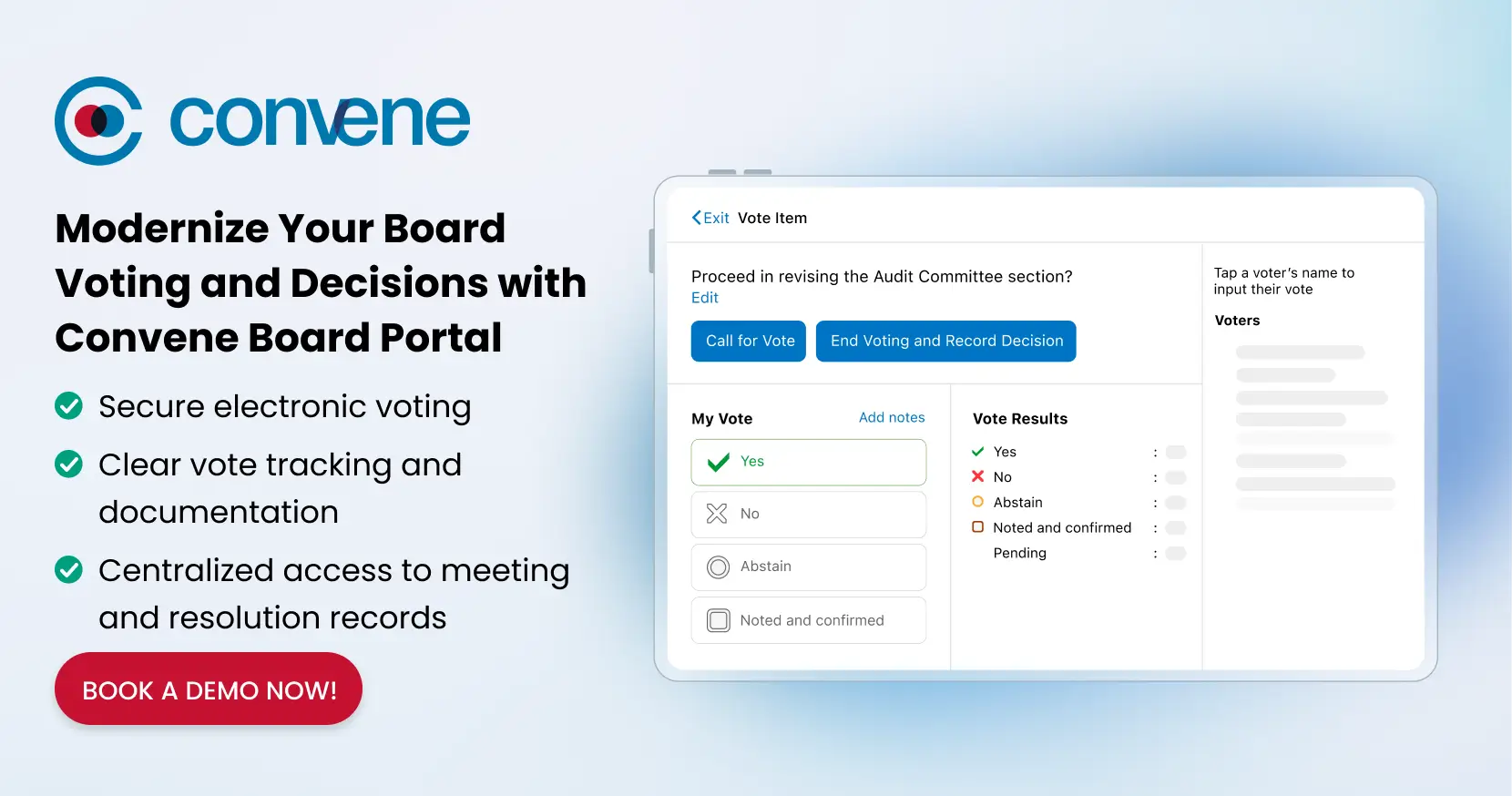
For modern boards, however, the voting method is only part of the equation; how votes are conducted, recorded, and secured matters just as much. As such, most organizations now rely on digital board portals like Convene to support both plurality and majority voting. This modern solution offers:
- Secure electronic voting, using tools such as Review Rooms, Resolutions, Weighted Voting, and digital signatures to ensure confidentiality and integrity
- Clear vote tracking and documentation, supported by comprehensive audit trails
- Centralized access to meeting and resolution records through a secure Document Library that keeps materials organized and easy to retrieve
Moreover, boards can leverage Convene AI to streamline tedious administrative tasks, generate smart meeting summaries, and highlight key decisions, saving time and keeping members focused on strategy rather than logistics.
Make your vote count. Discover how the Convene board portal can help keep your board decisions on track by requesting a demo today.



Jess is a Content Marketing Writer at Convene who commits herself to creating relevant, easy-to-digest, and SEO-friendly content. Before writing articles on governance and board management, she worked as a creative copywriter for a paint company, where she developed a keen eye for detail and a passion for making complex information accessible and enjoyable for readers. In her free time, she’s absorbed in the most random things. Her recent obsession is watching gardening videos for hours and dreaming of someday having her own kitchen garden.
- Connect:
-